» Site Navigation

2 members and 416 guests
Most users ever online was 47,180, 07-16-2025 at 05:30 PM.
» Today's Birthdays
» Stats
Members: 76,084
Threads: 249,225
Posts: 2,572,828
Top Poster: JLC (31,651)
|
-
Registered User

What do I do with this poor baby?
I'm new here and new to Ball Pythons so please forgive my ignorance, but I have a baby male who isn't doing so well and I have no idea what do. Quick stats.
* bought at a reptile expo on 12/10 from a small breeder
* was told he was eating live pinkies and was due to be fed that evening
* he is seven months old
* tub setup (temp 85, humidity between 50 and 60%)
* left him alone for a week to acclimate, per my research before offering F/T rat pup. He refused
* left him alone for another week, again because I'd read it was normal and fine to go long periods without eating.
* offered F/T pinky which I thawed in mouse bedding, heated with a hairdryer, brained and shook with tongs for 10 mins. He just hid his head.
* left him alone for several days and when I checked on him he looked like he was losing weight. His skin was loose and wrinkled and his back was becoming pointed.
* gave him a Pedialyte soak after research suggested he may be dehydrated. He looked a bit better.
* contacted his breeder with his state, and he told me it would be useless to try switching him to F/T and provided me with a few people who may have live pinkies. (I had already called every pet store in my area, live feeders are no longer allowed apparently).
* no one had pinkies. Smallest was a mouse hopper and he assured me he should be able to eat that. I took two.
* offered the hopper several days ago and he struck and killed after much dangling and shaking, but seemed to have trouble swallowing. Struggled for about 2 hours before giving up. Left the hopper in overnight, still there in the morning.
* starting to look worse, very wrinkled, lethargic, eyes look dry.
* after calling the exotic vet and not having available apt for several days, decided to soak again and assist feed. Barely puts up a fight, but was able to swallow pinky.
* looks better today, much more active and alert.
So I guess my questions are... How serious is his condition? How long can a 7 month old go without eating? Why was he on pinkies? Why wasn't he able to get the hopper down? Why was he dehydrated? What do I do now? I don't want to cause him any more stress than necessary so do I assist feed again? If so when and how much? When do I offer the hopper?
I'm sorry, I know this is a lot but obviously I'm not making the right decisions for him, and getting the right info just by researching so I need help. I'm very worried about him so any advice would be appreciated.
-
-
We'll need more specific information on the setup you have, pics would be best.
Specific questions:
- How are you heating? UTH? CHE? RHP?
- What's the temp on the cold side and the hot side?
- What's the size of the tub?
- What's the animal given for security options? (Hides? How many? Plant cover? Which substrate? Tub sides blacked out?)
So pics of the animal and also the setup will help us possibly root out issues on your end, which is all we can really do. Seems to be some issues on breeder side as well, based on the information you've given, but nothing to be done about that. All we can focus on right now is trying to rectify what might be causing the animal to have these reactions.
Going into the vet and getting a checkup and fecal screen no matter what is also advisable.
-
The Following 2 Users Say Thank You to hollowlaughter For This Useful Post:
C.Marie (01-04-2018),wolfy-hound (01-06-2018)
-
Do this to a T https://ball-pythons.net/forums/show...-hatchling-101 but adjust the prey size to something equal the girth size, pinkies are too small as for hopper they should if it is an average seven month old, hoppers are usually offered for the first 2 to 3 meals in the animal's life, without a weight or picture it's hard to tell what your ideal prey should be.
-
The Following User Says Thank You to Stewart_Reptiles For This Useful Post:
-
Re: What do I do with this poor baby?
welcome to the forum!!! i'm going to go over a couple points on your post to try and clarify some things and offer advice:
 Originally Posted by LindsayMichelle

* tub setup (temp 85, humidity between 50 and 60%)
could you expand on your temps a bit? there are 3 temperatures you should know at all times: heat source temperature, enclosure hot spot temperature, and ambient (air) temperature. also, what is your enclosure like and what equipment are you using? heating elements, thermometers, etc.
the main reason young ball pythons don't eat is due to poor husbandry. you need to get your husbandry 100% correct before trying any more soaking or assist feeding.
Originally Posted by LindsayMichelle
* left him alone for a week to acclimate, per my research before offering F/T rat pup. He refused
switching from mice to rats can be a struggle, let alone from live to F/T, so a refusal is unsurprising.
Originally Posted by LindsayMichelle
* offered F/T pinky which I thawed in mouse bedding, heated with a hairdryer, brained and shook with tongs for 10 mins. He just hid his head.
rat or mouse??
Originally Posted by LindsayMichelle
* contacted his breeder with his state, and he told me it would be useless to try switching him to F/T and provided me with a few people who may have live pinkies. (I had already called every pet store in my area, live feeders are no longer allowed apparently).
it is not impossible or useless to try and switch. i'm not sure what this breeder was thinking telling you this.
Originally Posted by LindsayMichelle
* looks better today, much more active and alert.
"active and alert" along with "better" are not words i'd use together to describe a ball python. an active beep is usually stressed.
Originally Posted by LindsayMichelle
So I guess my questions are... How serious is his condition? How long can a 7 month old go without eating? Why was he on pinkies? Why wasn't he able to get the hopper down? Why was he dehydrated? What do I do now? I don't want to cause him any more stress than necessary so do I assist feed again? If so when and how much? When do I offer the hopper?
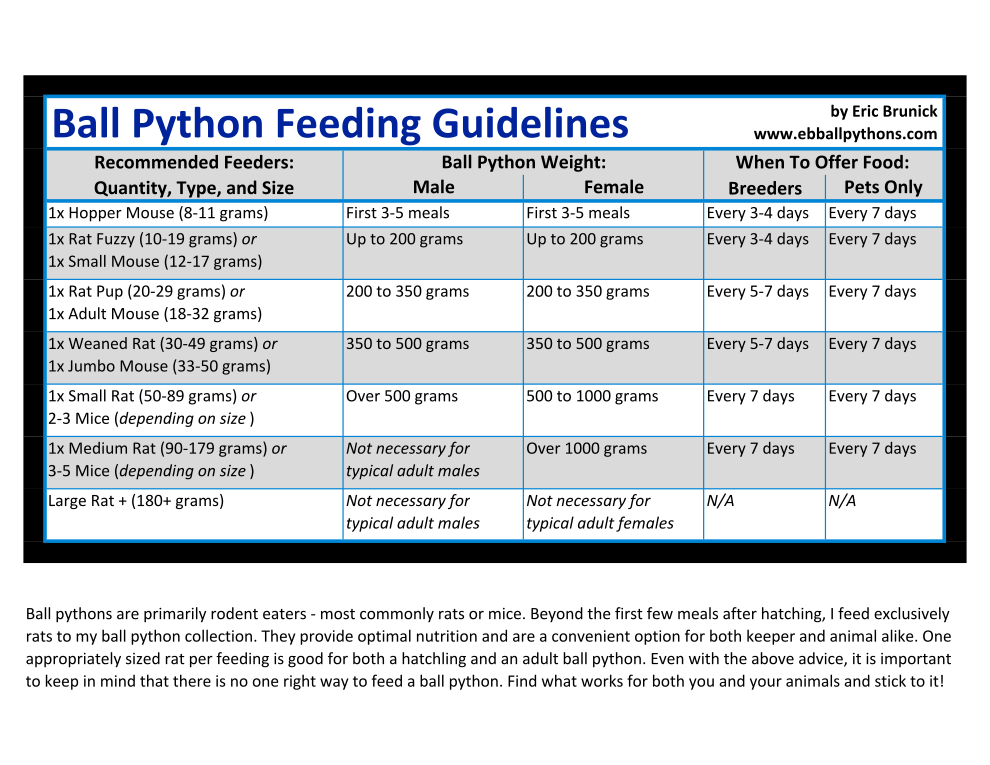
ball pythons are very efficient with their food intake and metabolism. a 7mo old at a healthy weight can last quite a long time without food. how much does your snake weigh? let's start here:
Last edited by tttaylorrr; 01-04-2018 at 06:14 PM.
4.4 ball python
1.0 Albino ✮ 0.1 Coral Glow ✮ 0.1 Super Cinnamon paradox ✮ 1.0 Piebald ✮ 0.1 Pastel Enchi Leopard het Piebald ✮ 1.0 Coral Glow het Piebald ✮
1.0 corn snake
1.0 Hypo ✮
1.0 crested gecko
0.1 ???? ✮
0.1 cat
0.1 Maine Coon mix ✮
0.1 human ✌︎
-
The Following 2 Users Say Thank You to tttaylorrr For This Useful Post:
C.Marie (01-04-2018),wolfy-hound (01-06-2018)
-
Re: What do I do with this poor baby?
I'm sad to hear about your problems.
Switching a ball python from eating live to F/T is a lot of work, especially for someone who hasn't had a ball python before. I am also a bit concerned about him still eating pinkies. He's not a hatchling anymore. I think he should be on adult mice by now but if he's not big enough then that's not possible.
Honestly, I think the breeder you chose to go with is not a good breeder.
Do you have a photographs of the little noodle? If yes, could you post it?
How serious is his condition?
If he's loosing weight, then there's a problem. Have you weighed him and kept track of his weight?
How long can a 7 month old ball python go without eating?
If he's not loosing weight and just simply fasting, then he can go for months without a problem. There are cases in which ball python fast for more than 9 months.
Why was he on pinkies?
I'd like to know that as well.
Why wasn't he able to get the hopper down?
The animal seems really stressed to me. Sometimes switching to bigger sizes can cause problems for ball python. If the hopper is a big as the biggest part of the ball pythons body, then he should be able to swallow it. If not, then you must choose a bigger or a smaller prey item. For now sticking with pinkies (maybe take 2 when you feed him) is probably your best option.
Why was he dehydrated?
I believe the breeder isn't a very good one.
What do I do now?
Try not to stress the little worm and give him some time. Change his water often and take care of humidity. Try to feed him every 5 days with pinkies for now and keep track of his weight.
I don't want to cause him any more stress than necessary so do I assist feed again?
Assist feeding is very stressful for a ball python. I would suggest not to do it unless there really isn't any other way.
When do I offer the hopper?
When he has eaten the pinkies for about 5 times in a row and looks healthy to you.
I hope this was a least a bit helpful. There are a lot of people in this forum who lots of experience (way more than I do). The best advice I can give you is to listen to their advice!
-
The Following User Says Thank You to Caali For This Useful Post:
-
Re: What do I do with this poor baby?
Originally Posted by tttaylorrr
"active and alert" along with "better" are not words i'd use together to describe a ball python. an active beep is usually stressed.
I read active and alert as "more responsive" in this context vs responding to stimuli sluggishly, displaying lethargy, so it may well be better. Depends on which way the poster means it.
OP- if you can provide a picture of the snake, it would greatly assist people in knowing the best course of action. A good picture will allow people to assess the body condition of the snake. I
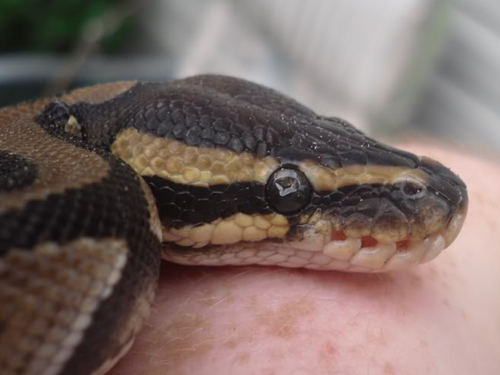
f the body condition isn't too bad, you should back way off on the intervention, make sure everything is up to par, and just let him de-stress. If it's critical, more drastic intervention can be discussed then. You can also use the same simple skin tenting test as is used for humans to check if there is critical levels of dehydration present - it's useful for most animals. Dented eyecaps can also be seen when snakes are dehydrated - looks like the picture below - although this can be seen with relatively mild dehydration. If there's no signs of anything worse than mild dehydration, good humidity and a water bowl are sufficient for rehydration.
Most snake species, including this one, are very good with low resource conditions. This means that in cases of underfeeding and dehydration, unless the issue is severe, they're usually better off just being provided what they need and left to their own devices to fix the issues.
Last edited by Kcl; 01-04-2018 at 06:25 PM.
1.0 Pastel yellowbelly ball python -Pipsy
2.0 Checkered garter snakes - Hazama & Relius
1.0 Dumeril's boa - Bazil
-
The Following User Says Thank You to Kcl For This Useful Post:
-
Re: What do I do with this poor baby?
Originally Posted by Kcl
I read active and alert as "more responsive" in this context vs responding to stimuli sluggishly, displaying lethargy, so it may well be better. Depends on which way the poster means it.
reading it back over, within its context your interpretation does make sense. i'm sure OP will explain.
4.4 ball python
1.0 Albino ✮ 0.1 Coral Glow ✮ 0.1 Super Cinnamon paradox ✮ 1.0 Piebald ✮ 0.1 Pastel Enchi Leopard het Piebald ✮ 1.0 Coral Glow het Piebald ✮
1.0 corn snake
1.0 Hypo ✮
1.0 crested gecko
0.1 ???? ✮
0.1 cat
0.1 Maine Coon mix ✮
0.1 human ✌︎
-
-
Registered User
Re: What do I do with this poor baby?
Ok I will get the info and pics asap. Give me a min though, both my girls have brutal stomach viruses right now and juggling their care and cleaning up the puke is...distracting.
-
-
Re: What do I do with this poor baby?
Originally Posted by LindsayMichelle
* was told he was eating live pinkies
You need to feed live then. I am sorry but it is more often than not that a new owner gets a ball python without any idea of the previous feeding habits. At least you know it was feeding live. You are going to have to do that for a while until you get it settled in and growing.
I recommend finding a pet store that offers fuzzy or hopper mice and purchase those. It is often very difficult to get a ball python swapped to frozen thawed rodents when you are also trying to correct husbandry issues and get them acclimated. It would be far better to feed the same prey type the breeder or seller was doing. Pinky mice are almost all gelatinous cartilage and fat and not really nutritious toward larger juvenile snakes like ball pythons. Starting on fuzzy or weaned mice would be far more nutritious and finding a smaller hopper mouse would be best.
Get him feeding then worry about switching to frozen thawed.
1.0 ♂ 2010 Spider BP 'Dante'
1.0 ♂ 2017 Bay of LA Rosy Boa 'Queso'
0.0.1 2017 Aru GTP 'Ganja'
1.0 ♂ Blue Tick Coonhound 'Blue'
1.0 ♂ 2018 Basset Hound 'Cooper'
-
The Following 2 Users Say Thank You to SDA For This Useful Post:
C.Marie (01-04-2018),Godzilla78 (01-04-2018)
-
Re: What do I do with this poor baby?
Originally Posted by SDA
You need to feed live then. I am sorry but it is more often than not that a new owner gets a ball python without any idea of the previous feeding habits. At least you know it was feeding live. You are going to have to do that for a while until you get it settled in and growing.
I recommend finding a pet store that offers fuzzy or hopper mice and purchase those. It is often very difficult to get a ball python swapped to frozen thawed rodents when you are also trying to correct husbandry issues and get them acclimated. It would be far better to feed the same prey type the breeder or seller was doing. Pinky mice are almost all gelatinous cartilage and fat and not really nutritious toward larger juvenile snakes like ball pythons. Starting on fuzzy or weaned mice would be far more nutritious and finding a smaller hopper mouse would be best.
Get him feeding then worry about switching to frozen thawed.
They mentioned that their local pet stores aren't carrying live, they may be in one of the states/countries with a live feeder ban, which I'd point to as a breeder-based issue. Hindsight's 20/20, not everyone goes into it knowing to look for an animal already established on f/t rats.
Otherwise, correct. Upgrading this animal over time (aka pinky mice > fuzzy mice > hopper mice > etc) will probably be best to not stress its digestive system with a large jump in prey size, especially if it's already malnourished from its time in the breeder's care. Here's a recent guide on that. It'll be easier to swap once the animal is an established eater so you can afford to have it fast for a few months as it tries to wait you out for another mouse.
-
The Following User Says Thank You to hollowlaughter For This Useful Post:
Posting Permissions
- You may not post new threads
- You may not post replies
- You may not post attachments
- You may not edit your posts
-
Forum Rules
|






 Reply With Quote