






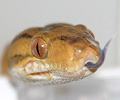
His ventral ("tummy") scales are totally normal...what I'd call "pearlescent". His black color probably hasn't changed, you just didn't see him in a strong light initially-
some are blacker than others. I have 2 dogs, & if you see the bigger one first, you'd call her a black dog. But in the sun, next to my other dog, she looks dark brown
due to tan hairs mixed in, where my other dog IS pure black. I wouldn't lose any sleep over it...and these are excellent pets, btw. But babies should be handled
only for a short time & gently...they're afraid (anything that picks up a snake in nature is normally a predator about to eat it!) & also they can easily over-heat (don't
forget their tiny body size & that you are roughly 98*). Be patient...they learn & get better to handle as they grow up. I love corn snakes too, & many kinds of rat
snakes...it's hard to stay focused with so many great choices to shop from.
BTW, many snakes that appear to be black do also have red underlying pigments (that makes them appear dark brownish). Among "Black rat snakes" native to the
U.S. -some have red & others don't, & when bred for albinism, the ones with red end up with beautiful patterns in shades of orange to red-orange with a background
of cream or white. (I used to breed them.) It wouldn't surprise me if the breeder you got this snake from has been selectively breeding for a similar thing in MBKs.

 Reply With Quote