» Site Navigation

0 members and 1,496 guests
No Members online
Most users ever online was 47,180, 07-16-2025 at 05:30 PM.
» Today's Birthdays
» Stats
Members: 76,073
Threads: 249,220
Posts: 2,572,808
Top Poster: JLC (31,651)
|
-
Power feeding is forcing your snake to eat more. So we all know that's not right. Over feeding is feeding too much and/or too often. I don't think you really can over feed a BP. I have never ever heard of a "fat" BP. They are probably the most self regulating species of snake. Unlike a boa, when they don't want no more they won't take no more. Due to what we know about their digestion, even if you are feeding an adult BP mice because they are anal about it, it would be better to feed them all at once than to spread out over a week.
That said....
A lot of people will say "7 days" but I know from my years on these forums and elsewhere that that is a PC term. I know plenty that feed breeding females every 5 days or do a 3/4 schedule like Sunday/Thursday or feeding something larger than normal every 7. And I have never seen any report of a bad outcome from that.
-
The Following 2 Users Say Thank You to MasonC2K For This Useful Post:
Godzilla78 (10-16-2017),JodanOrNoDan (08-10-2017)
-
All...
Just to be clear here we are talking ball pythons not boas. I have yet to have an overweight ball python. If anyone has any reports of ball python deaths because of voluntary feeding (not force or tube feeding) please let me know.
In my experience a ball python who has had enough to eat will strike and refuse to eat. Most of my animals strike from 2 to six months a year.
My holdback animals are fed an appropriately sized meal about twice a week. This continues until the animal reaches "max food size" which for males is a small rat and females a medium. At that point I back off to a weekly schedule unless the animal is on strike. The only time I break this regimen is when a female begins eating again after laying. Depending on the animal and its weight I will bump up the feeding schedule until the animal hits its before lay weight.
In my experience animals experience better growth when fed something that is the diameter of the snake no more than once a week (see exception above). Multiple smaller prey items fed frequently is probably not the best idea. Python digestive systems are designed to eat a relatively large meal then rest. If the animal is eating frequently the digestive system will not take the rest period it is designed to have.
Last edited by JodanOrNoDan; 08-10-2017 at 11:37 AM.
Honest, I only need one more ...
-
The Following 2 Users Say Thank You to JodanOrNoDan For This Useful Post:
chickenooget (08-12-2017),Godzilla78 (10-16-2017)
-
Re: Power feeding VS "Frequent feeding"
 Originally Posted by MasonC2K

I know plenty that feed breeding females every 5 days or do a 3/4 schedule like Sunday/Thursday or feeding something larger than normal every 7. And I have never seen any report of a bad outcome from that.
To be fair, how many of these breeders have ball pythons over 20 years old?
-
The Following 3 Users Say Thank You to John1982 For This Useful Post:
AbsoluteApril (08-10-2017),GoingPostal (08-11-2017),JodanOrNoDan (08-10-2017)
-
Re: Power feeding VS "Frequent feeding"
Originally Posted by John1982
To be fair, how many of these breeders have ball pythons over 20 years old?
That is a good question that I hope someone has an answer for. Most of my females are between five and ten years old. My oldest is fifteen.
Honest, I only need one more ...
-
The Following User Says Thank You to JodanOrNoDan For This Useful Post:
-
Re: Power feeding VS "Frequent feeding"
Originally Posted by JodanOrNoDan
That is a good question that I hope someone has an answer for. Most of my females are between five and ten years old. My oldest is fifteen.
My oldest are 15 as well.
-
The Following 2 Users Say Thank You to MasonC2K For This Useful Post:
JodanOrNoDan (08-10-2017),John1982 (08-10-2017)
-
Just a little something to add:
Lifespan/Longevity
The average lifespan of ball pythons in captivity is 20 years. Reports document the maximum lifespan in captivity ranges from 28 years (at the Oakland Zoo) up to 50 years (reported by the Philadelphia Zoo). Average life span in the wild is reported to be 10 years. (Gorzula, et al., 1997; Bartlett and Bartlett, 2000; Bartlett, et al., 2001; Gorzula, et al., 1997)
I couldn't find a newer source so this is what I have to go on.
So making it past 10 years means we are doing a better job for them than they would have in the wild. Hitting 20 means we are doing as good as most other keepers and beyond is just fantastic.
-
The Following User Says Thank You to MasonC2K For This Useful Post:
JodanOrNoDan (08-10-2017)
-
Re: Power feeding VS "Frequent feeding"
Originally Posted by MasonC2K
I don't think you really can over feed a BP. I have never ever heard of a "fat" BP.
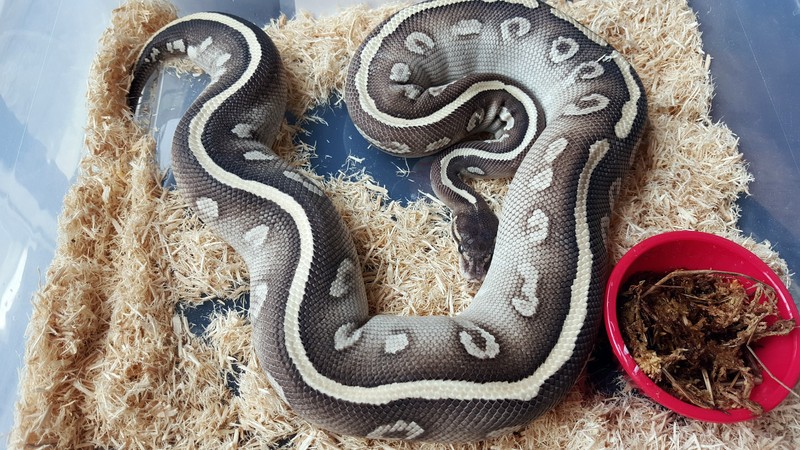
There are definitely fat BPs out there. I'm sure most of them that get overweight then often end up fasting but there is no reason to let that happen to one in captivity. They get that sunken in spine look as all the extra chub pushes up to the sides. I don't remember the specifics but there are liver issues related to them being over fed. I'm part of the slow and steady crowd for my breeders but the closest I've personally owned to being over weight was my super phantom when I first got her. It seems to be more common with snakes that eat live. I'm sure a little googling could pull up more extreme examples.
-
The Following User Says Thank You to Hannahshissyfix For This Useful Post:
AbsoluteApril (08-10-2017)
-
Re: Power feeding VS "Frequent feeding"
Originally Posted by HannahLou
There are definitely fat BPs out there. I'm sure most of them that get overweight then often end up fasting but there is no reason to let that happen to one in captivity. They get that sunken in spine look as all the extra chub pushes up to the sides. I don't remember the specifics but there are liver issues related to them being over fed. I'm part of the slow and steady crowd for my breeders but the closest I've personally owned to being over weight was my super phantom when I first got her. It seems to be more common with snakes that eat live. I'm sure a little googling could pull up more extreme examples.
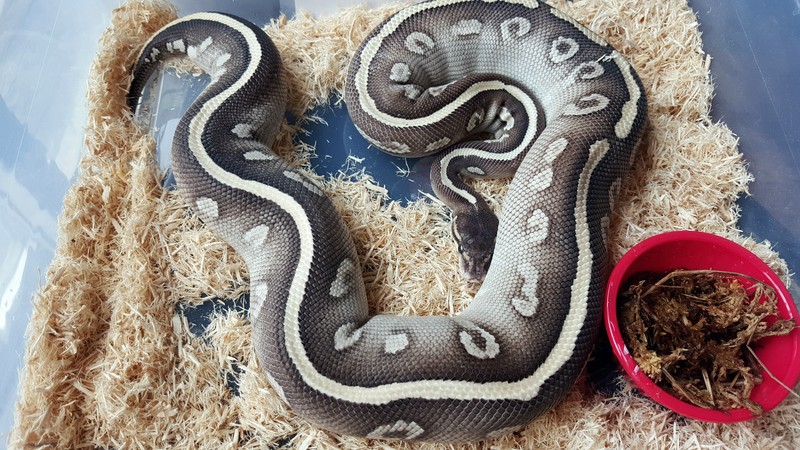
How was the animal when that picture was taken?
Honest, I only need one more ...
-
-
Re: Power feeding VS "Frequent feeding"
I guess she seemed fine. Nothing vet worthy so I can't say what was effected internally. I've had her over a year and she protested switching to ft so she dropped some weight during that initial process but the smaller meals kept her growing normally length wise but just thinned out her sides. She's either about to ovulate or I just missed it so she's bigger now but still doesn't look nearly as round even building. I wish I had taken more pictures of her body condition when I first got her. So this will be her first clutch and I'm curious to see how it goes or if she has slugs as I think someone had already mentioned.
-
The Following User Says Thank You to Hannahshissyfix For This Useful Post:
-
Re: Power feeding VS "Frequent feeding"
Originally Posted by MasonC2K
Just a little something to add:
Lifespan/Longevity
The average lifespan of ball pythons in captivity is 20 years. Reports document the maximum lifespan in captivity ranges from 28 years (at the Oakland Zoo) up to 50 years (reported by the Philadelphia Zoo). Average life span in the wild is reported to be 10 years. (Gorzula, et al., 1997; Bartlett and Bartlett, 2000; Bartlett, et al., 2001; Gorzula, et al., 1997)
I couldn't find a newer source so this is what I have to go on.
So making it past 10 years means we are doing a better job for them than they would have in the wild. Hitting 20 means we are doing as good as most other keepers and beyond is just fantastic.
Most write-ups you can find on reptiles will say, "average lifespan: 10-20 years", haha. Averages can be funny things anyhow, unless we know how they're doing their figuring. I reckon somewhere around 20-30% lower than the recorded maximum is a fairer idea of how long a healthy ball python will live in captivity. I bet 30 years is closer to a real age you can expect a captive bred pet ball python to reach. I doubt there are many CBB ball pythons dying at 20 years unless they've been overfed/bred a great deal. It's definitely an interesting topic with answers that will change, or become truer, as more time passes.
-
The Following User Says Thank You to John1982 For This Useful Post:
JodanOrNoDan (08-10-2017)
Posting Permissions
- You may not post new threads
- You may not post replies
- You may not post attachments
- You may not edit your posts
-
Forum Rules
|







 Reply With Quote