» Site Navigation

0 members and 1,750 guests
No Members online
Most users ever online was 54,199, 06-29-2026 at 02:43 AM.
» Today's Birthdays
» Stats
Members: 76,111
Threads: 249,260
Posts: 2,573,014
Top Poster: JLC (31,651)
|
-
Registered User


My luck is terrible
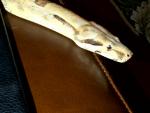
I just noticed my BP, Schemer, ticking this evening. Funny thing was that I took a sick day from school today. I checked out his mouth and he seems to have some bubbles (but not mucous) in there. I called my vet up and it indeed sounds like RI. He's been hogging heat on his hotspot since his last shed on the 19th, but I decided to observe for more symptoms before I started to worry. I thought it was nothing at the time. I'm scheduling an appointment for RI medication; the doctor mentioned shots. Here's the vet: http://www.southviewanimalhospital.c...tes/Clean.aspx
The owner, Dr. Foster, has a great rep as a reptile specialist there, it seems. Hopefully I can get in with him. The appointment is $54 and shots are $15-20.
I mentioned that case of scale rot he had on one scale, and he said it's common for one problem to lead to others. He also said I did the right thing( read more here: http://ball-pythons.net/forums/showt...74#post1689674 ) Coincidentally, that case of scale rot is starting to fade. From what he told me, my health problems are humidity related - it's been too low. Ever since I switched to my 30 gal and started using paper towels, my humidity has averaged at 40%. I decided to opt for a larger water dish, but to no avail. I'm now covering 2/3 of my screen with tin foil, keeping the center open for ventilation and placement of my ceramic heat emitter - I need to keep the ambient temps and humidity up.
Temps have always been correct, but I've had trouble with humidity. His hotspot is normally at 88-90 but I've upped it to 93-94 for the duration of his RI. Ambient is around 84-85 & the cool end is 78-80.
I just hope he gets through this. He eats regularly, defecates and urinates regularly, and even sheds normally. It's hard to imagine he had something wrong with him. Has anyone else had terrible luck with husbandry and health issues on their first snake?
-
-
Registered User
I got in with my appointment today and apparently it was a lot less severe than I thought. However, I still went through with medication to nip it in the bud. The vet tech up there injected 1 unit of amikacin subcutaneously on the upper third of Schemer's body, and I'll have to do the rest every 3 days alternating sides for 10 doses.
We had a ball practicing with saline solution; it took me 7 tries to do the injection perfectly. Mostly, it was a problem on my part of being afraid of putting pressure on my snake to hold him in place during the injections. The last fumble I had, the syringe bent and he urinated all over my clothes, lol.  I got it right after that... I got it right after that...
When I'm done with the doses, I'll have a follow up appointment scheduled. They're pretty in depth.
I was pretty satisfied with the exotic care they had there. If there are any Minnesotans in the area, definitely give Southview a try.
-
-
You did the right thing by seeing the vet when you noticed symptoms. Thumbs up!!
0.1 Normal - Suni
1.0 Spider - Crank
0.1 Pinstripe - Tielle
0.0.3 Normal - Meatball, Larry & Nautis
-
-
Did the vet culture the RI? Did he explain his choice of antibiotic?
Did your vet advise fasting the snake while administering the amikacin?
Amikacin is potentially toxic on the renal system so the animal should be well hydrated and fasted to keep the kidneys flushed. It is important that since you are dosing your snake for a month that this information be given to you. It is also important that such information come from the vet prescribing the medication.
I've never had any health issues related to RIs or scale rot due to low humidity. To the contrary, you run a much greater risk for both if you raise the humidity and do not provide enough ventilation. Maybe the vet can explain the mechanism in which humidity in the 40% range leads to URIs and scale rot. I'd be very interested to hear it.
-
The Following 8 Users Say Thank You to Skiploder For This Useful Post:
decensored (11-05-2011),Ezekiel285 (11-04-2011),Hydrolicious (11-04-2011),Kaorte (11-20-2011),L.West (11-04-2011),meowmeowkazoo (11-04-2011),Sarin (11-20-2011),Skittles1101 (11-04-2011)
-
Re: My luck is terrible
When I had to give my snake injections after his surgery - I was advised to soak him after each shot to increase his moisture level.
L. West
1.0 CORAL ALBINO BOA (OWEN)
1.0 PANAMANIAN HYPO BOA (SAWYER)
1.0 DUMERIL'S BOA (GRAYSON)
1.0 ALBINO HONDURAN (RIVER)
0.1 TANGERINE HONDURAN (FAITH)
1.0 ALBINO TESSERA CORN SNAKE (RILEY)
-
The Following User Says Thank You to L.West For This Useful Post:
Hydrolicious (11-04-2011)
-
Registered User

Re: My luck is terrible
I would give the vet a call back and inquire about the things that Skiploder mentioned. Sounds like he knows his stuff! Also, any time you have a small space with all that heat it always going to cause the humidity to drop. I think while you are treating the RI you should do away with the ceramic heat lamp. This will keep your humidity up because it won't be so hot in there. Perhaps look into a radiator to put in the room where your snake is to take the place of the heat lamp. I would use this even after the RI clears up. A space heater would even work, but I wouldn't recommened leaving it on for 24 hours. Oh I almost forgot... A humid hide for him would be awesome, especially during the treatment of the RI. You probably alreay know how to make one, but if not you can google it or try this: get a container and cut a hole in the top, wet some moss and ring it out just so that it is damp but not soaking wet and put it in there. DONE! A homemade humid hide! I hope I helped and best of luck to you. I'm sure your BP will be just fine!!! 
-
The Following User Says Thank You to Spyderco1116 For This Useful Post:
Hydrolicious (11-04-2011)
-
Registered User
Re: My luck is terrible
 Originally Posted by Skiploder

Did the vet culture the RI? Did he explain his choice of antibiotic?
Did your vet advise fasting the snake while administering the amikacin?
Amikacin is potentially toxic on the renal system so the animal should be well hydrated and fasted to keep the kidneys flushed. It is important that since you are dosing your snake for a month that this information be given to you. It is also important that such information come from the vet prescribing the medication.
I've never had any health issues related to RIs or scale rot due to low humidity. To the contrary, you run a much greater risk for both if you raise the humidity and do not provide enough ventilation. Maybe the vet can explain the mechanism in which humidity in the 40% range leads to URIs and scale rot. I'd be very interested to hear it.
I'll get a call in the next few days after I do the first treatment myself, so I'll ask then. But yeah, I'm familiar with all the care basics and some of the intermediate stuff, so I know not to go for excess humidity. Right now it's around 50%.
He did mention well hydration, but did not mention fasting. I just fed my snake a small rat(about 5-6 inch torso, was a monster) on the 31st, so he should be fine for the duration if I decide that's in his best interest. I'll ask the vet then look into that more. I wouldn't worry about the hydration as an issue, though. He never has wrinkles on his skin (he did for his first shed because I was inexperienced, but since then I've made all the appropriate husbandry changes) and typically sheds in 2-3 sock-like portions. Never had a perfect shed, but quite close. I think it's just him. I also manage to catch him drinking out of his dish several times a week(which I change every few days) and I have caught him bathing before, but not too often. Typically before and after sheds. He passes plenty of liquid urine along with his urates and droppings to show that he's well hydrated.
As far as ventilation goes, I have plenty available while still keeping the ambient heat and humidity in. I've got a 1 inch perimeter along the top of my screen that is exposed to the air, the rest covered by tin foil and my CHE in the middle portion. The screen itself is also not airtight around the edges because it's custom made, so there's some more airflow there. I really wouldn't worry about him having trouble breathing or living in a bacterial colony of immense proportions.
I really appreciate the advice though; you seem quite the knowledgeable person. I'll be sure to ask the vet about the fasting as you recommended.
-
-
Registered User
Re: My luck is terrible
Originally Posted by Spyderco1116
I would give the vet a call back and inquire about the things that Skiploder mentioned. Sounds like he knows his stuff! Also, any time you have a small space with all that heat it always going to cause the humidity to drop. I think while you are treating the RI you should do away with the ceramic heat lamp. This will keep your humidity up because it won't be so hot in there. Perhaps look into a radiator to put in the room where your snake is to take the place of the heat lamp. I would use this even after the RI clears up. A space heater would even work, but I wouldn't recommened leaving it on for 24 hours. Oh I almost forgot... A humid hide for him would be awesome, especially during the treatment of the RI. You probably alreay know how to make one, but if not you can google it or try this: get a container and cut a hole in the top, wet some moss and ring it out just so that it is damp but not soaking wet and put it in there. DONE! A homemade humid hide! I hope I helped and best of luck to you. I'm sure your BP will be just fine!!!
I don't have the walls insulated(I have them blacked out, though) so I need the increase in ambient from my CHE. I have it on a rheostat and everything monitored well enough as of now so I'm not concerned. My house gets rather cold(65-70) so it's a win-win for me and him.
Also, the cypress is doing a good job of keeping humidity in for him. I might switch back to aspen when he gets better, though, because cypress is much too dark to spot clean sometimes, especially when he burrows over his defecation. He also has a 6 inch water dish, so he has plenty of water surface area underneath the tin foil topping on my screen to keep more humidity in.
I do believe I have a space heater(I think that's what it is, I haven't used it for at least 10 years) in my basement, so I can try that if I'm having problems once again.
Last edited by Hydrolicious; 11-04-2011 at 08:44 PM.
-
-
Re: My luck is terrible
Originally Posted by Hydrolicious
I'll get a call in the next few days after I do the first treatment myself, so I'll ask then. But yeah, I'm familiar with all the care basics and some of the intermediate stuff, so I know not to go for excess humidity. Right now it's around 50%.
He did mention well hydration, but did not mention fasting. I just fed my snake a small rat(about 5-6 inch torso, was a monster) on the 31st, so he should be fine for the duration if I decide that's in his best interest. I'll ask the vet then look into that more. I wouldn't worry about the hydration as an issue, though. He never has wrinkles on his skin (he did for his first shed because I was inexperienced, but since then I've made all the appropriate husbandry changes) and typically sheds in 2-3 sock-like portions. Never had a perfect shed, but quite close. I think it's just him. I also manage to catch him drinking out of his dish several times a week(which I change every few days) and I have caught him bathing before, but not too often. Typically before and after sheds. He passes plenty of liquid urine along with his urates and droppings to show that he's well hydrated.
As far as ventilation goes, I have plenty available while still keeping the ambient heat and humidity in. I've got a 1 inch perimeter along the top of my screen that is exposed to the air, the rest covered by tin foil and my CHE in the middle portion. The screen itself is also not airtight around the edges because it's custom made, so there's some more airflow there. I really wouldn't worry about him having trouble breathing or living in a bacterial colony of immense proportions.
I really appreciate the advice though; you seem quite the knowledgeable person. I'll be sure to ask the vet about the fasting as you recommended.
You misunderstood the point - amikacin is one of the harsher antibiotics out there that is used to treat RIs. That's why it is important to use a vet that understands the critical importance of culturing and determining the sensitivity of the bacterial infection you are paying him to treat.
Frankly, I have never had it prescribed as a first line treatment for an RI. I suppose a vet in the habit of not culturing these infections may feel the need to pull out the big guns first..........whatever.
You paid good money for that vet visit - you and your snake deserve a vet that would recognize the need to culture that infection - especially in light of the fact that the symptoms were so light.
You also understand why feeding your snake when he is being treated with a drug that could harm his renal system could be a bad thing - right? Additionally, you are injecting this animal every 72 hours for 30 days. Have you considered what could happen if you feed him then have to dose him the next day? The last thing you need is a regurge.
Last edited by Skiploder; 11-04-2011 at 11:58 PM.
-
-
Registered User
I did not misunderstand your point; on the contrary, I focused my attention on all of them equally. Did you read my post, or just skim through it? Regardless, I understand now that you decided to focus on one thing.
I didn't have the money for a culture(it was $120) nor an x-ray($180). They did request that I pay for one, but I couldn't so they opted for amikacin. They didn't mention anything about feeding, as far as I can recall. They did mention potential kidney damage, but said I didn't have to worry because it was only 1 unit every 3 days.
So from all the worry here, I gather that I was under-informed. Am I right in this regard, then?
-
Posting Permissions
- You may not post new threads
- You may not post replies
- You may not post attachments
- You may not edit your posts
-
Forum Rules
|






 Reply With Quote