» Site Navigation

0 members and 1,864 guests
No Members online
Most users ever online was 54,199, 06-29-2026 at 02:43 AM.
» Today's Birthdays
» Stats
Members: 76,102
Threads: 249,251
Posts: 2,572,962
Top Poster: JLC (31,651)
|
-
Re: Super Spider??
I hadn't mentioned it here, but I bred my spider male Sam this year.
The clutches were as follows.
Clutch 1: 4 eggs, 4 formed spider babies. 1 died in egg. 3 live hatchlings.
Clutch 2: 3 eggs, 2 molded, 1 formed spider baby - died in egg. No live babys.
Clutch 3: 3 eggs, 1 molded, 2 formed spider babies - both died in egg. No live babies.
All "formed babies" were virtually ready to climb out of the egg, but simply died without emerging(or died right after emerging). This is not early fetuses, only fully formed baby snakes. No normals were hatched OR seen in eggs cut open.
ALL hatchlings produced(live or dead) in 3 clutches were spiders out of Sam. There was a HIGH mortality rate in the eggs. Was this the incubation? Was it due to care of females? Was it the father? I don't know. I will be breeding him to other females this coming season, and will be looking forward to seeing what hatches.
I feel that 3 clutches in one season, from 3 unrelated normal females all having all spiders with no normals is UNUSUAL at least.
I'm not claiming anything on Sam. I am wondering if there is some problem with the genetics, since I had a high rate of mortaility on otherwise good looking hatchings. The three live babies were poor eaters, and I will be keeping them until I am certain they are healthy before they will be offered for sale or trade.
I spoke with a few people about Sam and the odds. I just didn't post anything here yet, but seeing as the conversation is about the same idea, here is my personal info.
Theresa Baker
No Legs and More
Florida, USA
"Stop being a wimpy monkey,; bare some teeth, steal some food and fling poo with the alphas. "
-
-
Re: Super Spider??
What were your incubation temperatures and humidity level, particularly in the last month?
-
-
Re: Super Spider??
 Originally Posted by wolfy-hound
I hadn't mentioned it here, but I bred my spider male Sam this year.
The clutches were as follows.
Clutch 1: 4 eggs, 4 formed spider babies. 1 died in egg. 3 live hatchlings.
Clutch 2: 3 eggs, 2 molded, 1 formed spider baby - died in egg. No live babys.
Clutch 3: 3 eggs, 1 molded, 2 formed spider babies - both died in egg. No live babies.
All "formed babies" were virtually ready to climb out of the egg, but simply died without emerging(or died right after emerging). This is not early fetuses, only fully formed baby snakes. No normals were hatched OR seen in eggs cut open.
ALL hatchlings produced(live or dead) in 3 clutches were spiders out of Sam. There was a HIGH mortality rate in the eggs. Was this the incubation? Was it due to care of females? Was it the father? I don't know. I will be breeding him to other females this coming season, and will be looking forward to seeing what hatches.
I feel that 3 clutches in one season, from 3 unrelated normal females all having all spiders with no normals is UNUSUAL at least.
I'm not claiming anything on Sam. I am wondering if there is some problem with the genetics, since I had a high rate of mortaility on otherwise good looking hatchings. The three live babies were poor eaters, and I will be keeping them until I am certain they are healthy before they will be offered for sale or trade.
I spoke with a few people about Sam and the odds. I just didn't post anything here yet, but seeing as the conversation is about the same idea, here is my personal info.
Were all three of these clutches spider x spider breedings? That's the only way to possibly produce a homozygous spider. The high mortality rate in your clutches if they were from spider x normal breeding doesn't have anything to do with the spider gene.
-
-
Re: Super Spider??
The question is if Sam was produced from a spider X spider breeding. Do you know?
7 for 7 spiders from a heterozygous spider would be a 1 in 128 chance. So it's possible he is only heterozygous and you are just lucky (well, except on the live baby count). But, keep breeding him and let us know, especially if you can confirm he is from spider X spider so even has a chance to be homozygous.
To me, every dominant type mutation has a chance to be homozygous lethal until evidence is presented to prove it's not. I believe woma/pearl fits the definition as the pearls apparently don't survive to breeding. I will not be surprised if there are several others. I don't think it's any less responsible to mention the possibility than to not mention it. One possibly errors on the side of protecting the sellers and the other possibly errors on the side of protecting the buyers.
It's also important to remember what it would mean IF spider is homozygous lethal. It would NOT mean that regular spiders or spider crosses would necessarily be any more likely to not hatch or to die early than any other ball python. It would only mean that homozygous spiders from spider X spider breedings would not survive to breed (perhaps not even hatch).
Because people are long since no longer buying spiders with speculation of producing an awesome super whether or not spider is homozygous lethal (or even dominant vs. co dominant) really doesn't matter much. It’s mainly an academic question that we should probably have an answer to by now. People buy spiders to make spiders and awesome combinations which are proven and if spider is homozygous lethal it will not effect that at all.
By the way, if it where homozygous lethal and the homozygous didn't hatch then spider X spider breedings would produce 66% spiders from 3/4 sized clutches – so the same number as 50% from a full sized spider X normal clutch. The 75% spider ratio from spider X spider assumes that homozygous spiders hatch and look like regular heterozygous spiders.
-
-
Re: Super Spider??
Temps were 88F and humidity stayed right at about 70%, sometimes higher or lwoer(but that could have been flucuating readings from opening the incubator too).
I do not know what produced Sam. I stated in the post, the breedings were Spider x NORMAL females.
I only stated the facts from my breedings, and make no claims as to anything yet. I put the facts up here due to the fact that if Sam is a homozygous spider, then it COULD be some issues with his genetic offspring.
No one can say that it has nothing to do with it since the offspring aren't spider x spider, since no one has proved to have a homozygous spider. When someone proves a homozygous spider and breeds it without any issues with the offspring, then you could say the mortality has nothing to do with the spider gene.
I'm hoping it was not genetics that killed the hatchlings, since that means it's something *I* did, and something *I* can correct. If it is Sam's genetics causing high mortality then I have to find a different spider male, and Sam is an incrediable snake.
Thanks for the gentics numbers Randy, I get confused after a couple pudits, so I can't lay it all out that way. Great to be able to just read it.
Theresa Baker
No Legs and More
Florida, USA
"Stop being a wimpy monkey,; bare some teeth, steal some food and fling poo with the alphas. "
-
-
Re: Super Spider??
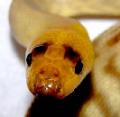
Boy, do *I* feel silly. Here I thought this thread was about this guy...


But speaking of supers, has anyone heard anything about the Super Pin lately?

-Lawrence
-
-
BPnet Veteran

Re: Super Spider??
Originally Posted by xdeus
Boy, do *I* feel silly. Here I thought this thread was about this guy...
But speaking of supers, has anyone heard anything about the Super Pin lately?
LOL>.. sweet, the only super spider we will see! 
-
-
Re: Super Spider??
Spidey!! Doing things only a spider can!!!
Theresa Baker
No Legs and More
Florida, USA
"Stop being a wimpy monkey,; bare some teeth, steal some food and fling poo with the alphas. "
-
-
Re: Super Spider??
Hm, my only suggestions for that would be possibly try lowering the temperature a couple of degrees the last few days of incubation, and make sure they get more air than usual.
Apparently brooding females loosen their coils at this time and expose the eggs to the air, and the eggs' temperature drops. So if you have the problem with several clutches, it's worth a try.
Also, do you have any references for the Pearls not surviving? The only note I can find on them is one from NERD stating they've been produced twice from Woma X Woma and that the genetics were still being studied.
Last edited by WingedWolfPsion; 09-28-2007 at 10:19 PM.
-
-
Re: Super Spider??
I think I stumbled on the new NERD website a few weeks ago and you are looking at the old site which I suspect is a little dated. NERD’s first pearl predated all other public white ball pythons. Graziani’s site puts the first pearl at 2000, a year after Spider was proven genetic. Before the pearl a white ball python was a mythical creature of legend. There were stories of babies in bottles at exporters and of one passing through the states on the way to Asia but no pictures to convince the doubters. I suspect NERD has produced pearl more than twice now. To put the amount of ball python morph world change of the last 7 years into perspective it’s now gotten to the point that people say things like “not another white snake” (which seems more than a little silly to me) when we used to say things like “do you think there really was or ever will be a leucistic ball python?” But I wax nostalgic; don’t get me started on rec.pet.herps. Funny the feuds and scandals are about the same even if the technology and morphs have increased exponentially.
The new NERD site gives a little more information on pearl here:
http://www.newenglandreptile.com/ner...d=79&Itemid=58
There was a report a few years ago of an adult imported animal that looked to be a pearl which would tend to give some hope but I never heard if it reproduced and was proven to be the same thing or not.
Of course actual breeding results would be best for being sure about anything but if a homozygous spider does exist I wouldn't expect it's offspring to have any problems that the spider offspring of a normal heterozygous spider don't have. The only difference from the offspring standpoint should be 100% rather than 50% spider offspring, if there could be a breeding homozygous spider to start with regardless of what it would be like. It's not like a homozygous spider could give two copies of the spider gene to the same offspring. Any genetics a homozygous spider could pass on a heterozygous one could also pass on, just in different ratios. I could maybe see a mutation where a female might not be able to lay good eggs but if the male could hatch with a mutation so should the offspring he passes a single copy on to.
I've had my share of bad luck hatching eggs over the years and we always try to figure out something to do better so keep at it and better luck next year.
-
Posting Permissions
- You may not post new threads
- You may not post replies
- You may not post attachments
- You may not edit your posts
-
Forum Rules
|






 Reply With Quote