» Site Navigation

1 members and 1,897 guests
Most users ever online was 54,199, 06-29-2026 at 02:43 AM.
» Today's Birthdays
» Stats
Members: 76,104
Threads: 249,251
Posts: 2,572,972
Top Poster: JLC (31,651)
|
-
Registered User

Re: Will my python ever recover?
They did more bloodwork today and I will provide the vets comments next.
They told me yesterday that they were very concerned with her and that she was becoming sepsis. However, the bloodwork showed no infection and must be due to the shed cycle like I told them.
It has to be bad if my vet can't determine sepsis vs shedding, correct?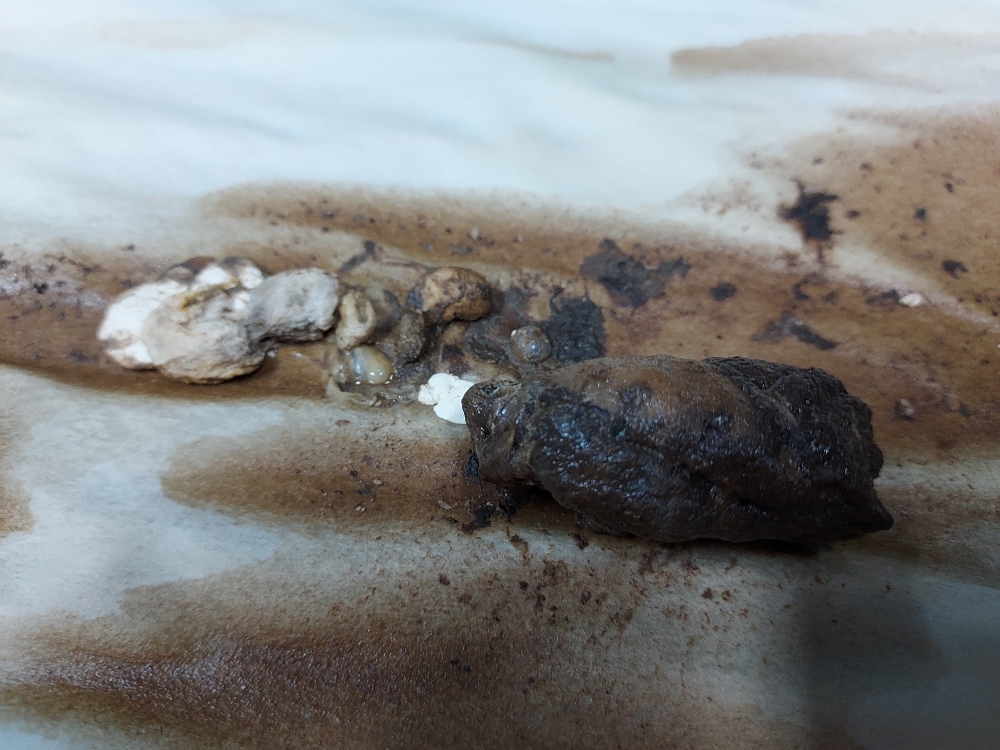
Sent from my SM-A426U using Tapatalk
-
-
Registered User
I am still waiting on the husbandry consultation. She is working on it as we speak but typically requires a few days for a thorough examination and recommendations. We will get you this information in discharge as soon as they are available.*
I wanted to send you the tentative medical aspect of Jasmine's discharges (see below), while we wait on this. When this is complete, I will email a PDF of the completed discharge summary.
I also wanted to discuss her bloodwork results:*
Her overall white blood cell count was low, especially compared to her most recent bloodwork. This makes me concerned that she is immunocompromised - I do not know why at this point in time, because additional diagnostics would be needed for this. Even though there are no signs of active infection, I would like to keep her on the antibiotic in order to prevent any infections from forming - we can have her back for a recheck visit and repeated antibiotic injection in about 9 days for this.*Her overall red blood cell count is low, called anemia. It is very mild, but progressive from her last bloodwork. This can also be seen if she is immunocompromised if her body is not producing enough red blood cells to replenish its normal supply. I would like to recheck this value in about a week, with her next antibiotic injection.*Her liver value (AST) was slightly elevated, however this value gets released from muscle damage after about 12 hours. With the amount of restraint required for x-rays yesterday, I feel very confident that this is secondary to obtaining the x-rays. This is backed up with the fact that her muscle value (CK) is very high as well.*
Please let me know if you have any questions. I will be in the office tomorrow afternoon to answer any questions and update you with the husbandry recommendations.*
-
-
Registered User
I can't say for certain, but I pretty damn sure that I will never take her there again. She has had antibiotics, 5 blood tests, 3 fecal samples and an xray. That should be enough testing, if they still don't know what to do, then they will never know. They want to continue the antibiotics they started yesterday and they want me to continue the oral medications for 2 weeks. By putting the medication in a small rodent and feed her one every other day.
So, this is my last chance to get it right.
I asked for confirmation from my vet and this forum multiple times if it's okay to feed her 1 275-300g rat every 10 days. I even sent pictures to my vet that showed me measuring the rat and the snake with a ruler! If anything, the forum made it sound like I was feeding her enough and recommending 5% of her body weight.
I tried, I have taken her to the vet about 10 times in the past 6 months. Please let me know if you recommend euthanasia now.
In the meantime, I am going to soak her every day for 1 hour. She is in shed so I'm not going to fed her for at least a week, although I have no idea what size to order now. Thanks again for your help
-
-
Registered User
Re: Will my python ever recover?
This is how I'm soaking her,
Sent from my SM-A426U using Tapatalk
-
-
Registered User
Re: Will my python ever recover?
Do this force acceptable exercise? If so, she is well hydrated/getting enough humidity, getting exercise, at the correct temps, more than enough space in her enclosure and eating well. What more can I do, other than make the pvc jungle jym?
I have an automated misting system for her enclosure that goes off about 4 times per day for 15sec. Plus there is very large humidifier in her room and I hand mist her a lot almost every night.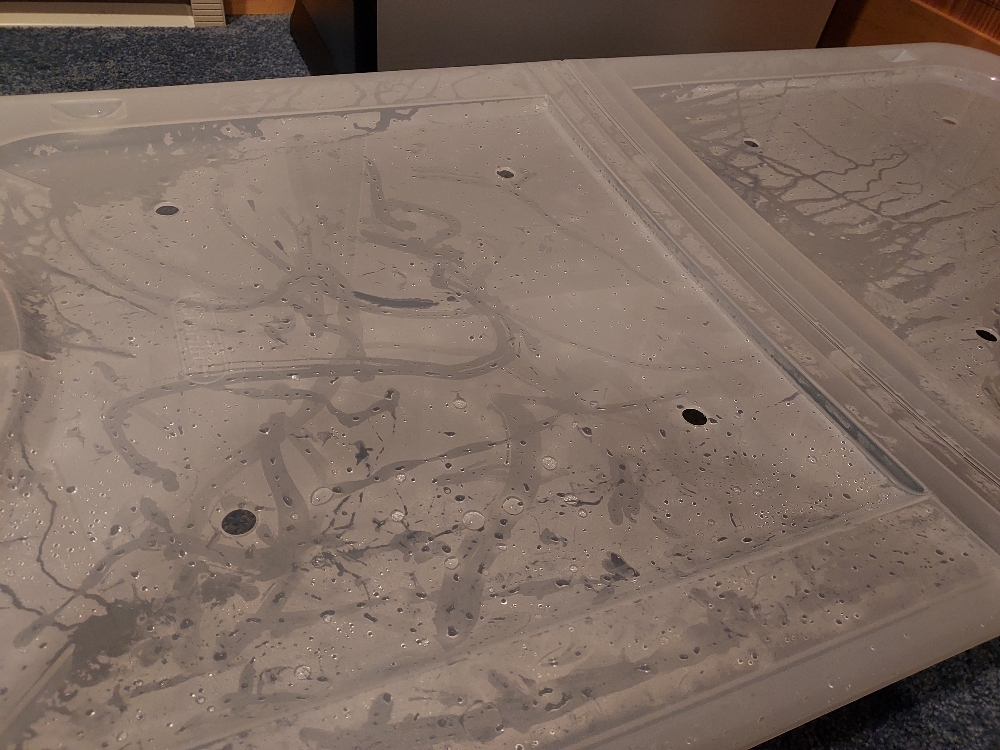
Sent from my SM-A426U using Tapatalk
-
-
Registered User
Re: Will my python ever recover?
I spot clean her cage every 2-3 days and clean every inch of the entire enclosure along with everything inside it once a month. I give her fresh water every 1-2 days. There is much more that I could have done for her.
Sent from my SM-A426U using Tapatalk
-
-
Registered User
Re: Will my python ever recover?
My vets response continued,
DIAGNOSIS:*
1. Colonic Impaction, fecoliths - rule out secondary husbandry (inadequate humidity, inappropriate diet, lack of adequate exercise, low temperature) vs. medical (dehydration, renal disease, arthritis, neurologic, mass effect, stricture/narrowing)*
2. Cardiomegaly (enlarged heart) - due to lack of normal parameters for species, can be a normal variant or related with post feeding increase in metabolic rate, but based on displacement concerned for underlying cardiovascular disease*
DIAGNOSTICS PERFORMED:
1.*Complete Blood Count: mildly low total white blood cell count, no signs of active infection. Mild anemia with signs of regeneration.*
2.*Chemistry: elevated muscle value likely due to restraint; elevated AST (influenced by liver and muscle) likely elevated due to prolonged restraint for x-rays*
3.*Radiographs (x-rays): enlarged heart, large amount of colonic impacted material*
4.*Fecal Ova & Parasite Testing: negative for parasites*
Diagnostic tests including referral for an echocardiogram and CT scan were declined at this time.*
CASE SUMMARY: Jasmine was evaluated at MLAH Exotics for continued workup for chronic weight loss and impaction. On initial evaluation, Jasmine remains bright and alert - her weight is fairly stable from her prior visits (current weight as of 4/12/23 is 8.1 kg).*
On evaluation, her coelom (abdomen) in front of her vent was very tense with firm mass effects palpable. These were confirmed to be mineralized fecal contents on radiographs (x-rays) performed, consistent with colonic (colon) impaction. This can be secondary to a wide variety of disease and husbandry (care at home) causes, and pinpointing the exact cause can be difficult without additional diagnostics. Common causes include dehydration (which can be secondary to low humidity, diet related, kidney disease), gastrointestinal infections, an anatomical inability to pass large stools (such as a mass effect, narrowing of the colon) or other systemic disease.*
As snakes only eat a few times a month, they have to repress their organs and proteins to conserve energy. When they eat, their organs grow back in size to digest the food and make up for increased oxygen consumption during digestion due to the higher energy costs to rebuild the proteins and organs that have atrophied during fasting. In addition, there is a process called "adaptive ballast" where some snakes retain their feces for a hunting advantage in capturing large prey - this can add to a snakes muscle mass while being inert (ie not requiring calories to maintain). They can also quickly release their feces to allow for quick escape if needed. Occasionally, when this is maintained for too long, the feces can buildup and become mineralized.*
It is difficult to determine how long the abnormal feces has been present, but can be prolonged (up to months). As discussed, due to the amount of material in her colon, we recommended a sedated enema to aid in passage of this material. Due to costs and the risks of sedation, you elected to hold off on this. We also recommended medical management with oral medications, which are difficult to administer at home. We recommended technician visits for administration - you are electing to attempt to administer via a prey item at home. If medical management fails, ultimately a sedated procedure may be necessary.*
We also noted that Jasmine's cardiac size was enlarged on x-rays. While we do not have normal parameters for heart size in her species, we suspect that based on the level of enlargement this is true enlargement. Some snakes can have an increase in their heart size after a meal to increase metabolism, but we are unable to determine if there is underlying cardiovascular disease without an echocardiogram (ultrasound) of the heart to evaluate the size, shape and function. As we have limited cardiology availability here, we discussed referring to Red Bank Tinton Falls or Animal Medical Center (AMC) in NYC. You have declined further workup of the enlarged heart at this time. Without knowing the cardiac function, sedation and/or anesthesia can be riskier or even result in death.*
______________________________________________
Sent from my SM-A426U using Tapatalk
-
-
Re: Will my python ever recover?
 Originally Posted by leosantare

It has to be bad if my vet can't determine sepsis vs shedding, correct?
Apparent redness concurrent with some sort of blockage and non-distinct "off" appearance sure sounds like sepsis isn't a completely unreasonable suspicion. Expecting any vet to see a reddish belly on a snake that's ill from unknown causes and rule out all possibilities visually isn't at all reasonable.
The vet may well feel to be in a position where they are expected to voice every suspicion, and to treat every possibility aggressively. The vet might be feeling sort of overwhelmed, or feel like there is excessive pressure being put on them. Just speculating here, but if euthanasia is mentioned to the vet as often as it is in the thread, or arbitrary 'last chances to get it right' are mentioned, I suspect the vet might be in a position they don't like to be in or want to be in.
As to the appearance of the snakes' mouth -- it looks pretty angry, apparently from being forced open for the meds. That happens frequently, at least when I open mouths for dosing or swabbing; snakes' mouths bleed pretty easily, but they heal up quickly too. It is far better than not getting necessary meds.
-
The Following User Says Thank You to Malum Argenteum For This Useful Post:
-
Re: Will my python ever recover?
Originally Posted by leosantare
... Please let me know if you recommend euthanasia now...
ABSOLUTELY NOT.  I'd have had the vets DO the enema as they proposed doing today. I would NOT try to medicate her at home now by putting medication in food, as feeding while impacted is NOT a good idea...it's a very BAD idea, assuming you don't enjoy making a snake's condition worse & the snake suffer more? I'd have had the vets DO the enema as they proposed doing today. I would NOT try to medicate her at home now by putting medication in food, as feeding while impacted is NOT a good idea...it's a very BAD idea, assuming you don't enjoy making a snake's condition worse & the snake suffer more?
The soaking (as shown) might have helped if done sooner (& multiple times), but when a snake's fecal material has compacted & "mineralized"- she NEEDS HELP NOW. Preferably professional help.
I have a hunch that the vets consulted are being extra cautious (ie. very thorough) perhaps because they realize the value of this rare snake, not to mention the way you seem to keep bringing up euthanasia rather than helping her. I would be helping her- get the enema done.
The more you stall & the more vet visits you keep doing, the worse you're making this for your snake- every visit stresses the snake & that's bad for their health. A snake that simply needs help to defecate is NOT a candidate for euthanasia- this is perfectly fixable.
Last edited by Bogertophis; 04-13-2023 at 11:13 PM.
Rudeness is the weak man's imitation of strength.
Eric Hoffer (1902 - 1983)
“The greatness of a nation and its moral progress can be judged by the way its animals are treated.” ~ Gandhi
-
The Following 2 Users Say Thank You to Bogertophis For This Useful Post:
Malum Argenteum (04-14-2023),Ruby (04-14-2023)
-
Registered User
Re: Will my python ever recover?
Why do the enema, when we don't know the cause and it can just happen again? I wasn't doi g anythong wrong. Plus, the risk of death from anthesia with an enlarged heart.
Plus, she just did poop without an enema. I posted pictures.
Sent from my SM-A426U using Tapatalk
-
Posting Permissions
- You may not post new threads
- You may not post replies
- You may not post attachments
- You may not edit your posts
-
Forum Rules
|






 Reply With Quote