» Site Navigation

0 members and 1,860 guests
No Members online
Most users ever online was 54,199, 06-29-2026 at 02:43 AM.
» Today's Birthdays
» Stats
Members: 76,102
Threads: 249,251
Posts: 2,572,962
Top Poster: JLC (31,651)
|
-
Registered User

What does "in blue" mean?
I've seen the term "in blue" used several times referring to feeding BP's. I read in one post in the Rainbow Bridge that they'll "never feed in blue" again because it killed their snake. I'm trying to cover ALL my bases before I get my first pet snake and if "feeding in blue" can kill a snake, I really need to know what it means.
If I didn't ask your opinion, I don't want it.
--
Proud artist and reptile lover <3
--
Yes, I do believe snakes are capable of enjoying a human's presence.
-
-
In blue mean in deep shed which will give a blue hue to your snake.
-
The Following User Says Thank You to Stewart_Reptiles For This Useful Post:
AmericanTacos (01-03-2018)
-
Re: What does "in blue" mean?
"In blue" is a thing that happens a few days before a snake sheds its skin. It's eyes get clouded over for a day or two and can sometimes have a slightly blue tint to them. Usually during this time a snake will not feed if offered food. The actual blue-invite of the eyes isn't what killed the snake. I'm sure what happened in the incident you're speaking of is that they put a live prey item in with the snake and the snake wanted nothing to do with it. Then the mouse or rat bit and killed the snake.
Sent from my iPhone using Tapatalk
1.0 Normal BP
1.0 Mainland Reticulated
1.0 High lines Red Tail Boa
-
The Following 3 Users Say Thank You to dylan815 For This Useful Post:
AmericanTacos (01-03-2018),Craiga 01453 (01-03-2018),SDA (01-03-2018)
-
For ball pythons it is the secondary stage for shedding. The primary is often a pinkish hue to the underside of the snake some theorize to be a reaction to the oncoming shedding of skin, much like how you would get a rash or hives. The secondary stage is when the skin and eyes become dull and the eyes look cloudy or milky. The blueish tint is where the term "in blue" comes from. It is actually the process of old skin separating from the new growth. Shortly after this the skin and eyes clear up and the snake will before long shed their skin. These last two steps are often a time when the snake expends energy and is feeling vulnerable so for ball pythons, the act of feeding can be stressful and isn't recommended. Occasionally some owners find their snakes eat during this time but as a rule of thumb, just avoid feeding when you see your snake's eyes get cloudy.
1.0 ♂ 2010 Spider BP 'Dante'
1.0 ♂ 2017 Bay of LA Rosy Boa 'Queso'
0.0.1 2017 Aru GTP 'Ganja'
1.0 ♂ Blue Tick Coonhound 'Blue'
1.0 ♂ 2018 Basset Hound 'Cooper'
-
The Following User Says Thank You to SDA For This Useful Post:
Craiga 01453 (01-03-2018)
-
The above replies have been spot on with describing what "in blue" actually refers to.
To piggy back on the feeding part...
Feeding while in blue definitely didn't kill the snake. The reason many people, myself included, don't feed while snakes are in blue is simply because they won't eat. While in blue, snakes eyes are clouded over, which results in compromised vision. The snakes are essentially blind at this point and therefore feel vulnerable. A snake that feels vulnerable will often refuse to eat because the added weight of a prey item in their system, combined with the digestive process would slow a snakes escape if a predator were to appear.
Of course, there are exceptions to the rule. When I get a new snake, if their scheduled feeding day falls while they are in blue I offer once. If they refuse, which most do, I never offer again while in blue and feed the day after they complete their shed and start a new feeding schedule from that day.
If the snake does eat, which my Cal King does, I feed as usual.
Last edited by Craiga 01453; 01-03-2018 at 01:33 PM.
-
-
Re: What does "in blue" mean?
This my img in blue or zombie eyes she gets like a blue sheen ,I know it shows up more on darker snakes she gets like a blue sheen ,I know it shows up more on darker snakes
Sent from my iPod touch using Tapatalk
-
-
Re: What does "in blue" mean?
I figured I would share the only pics on my phone that illustrate "in blue" vs "normal".
This is my brand new Borneo Short Tail Python in both phases...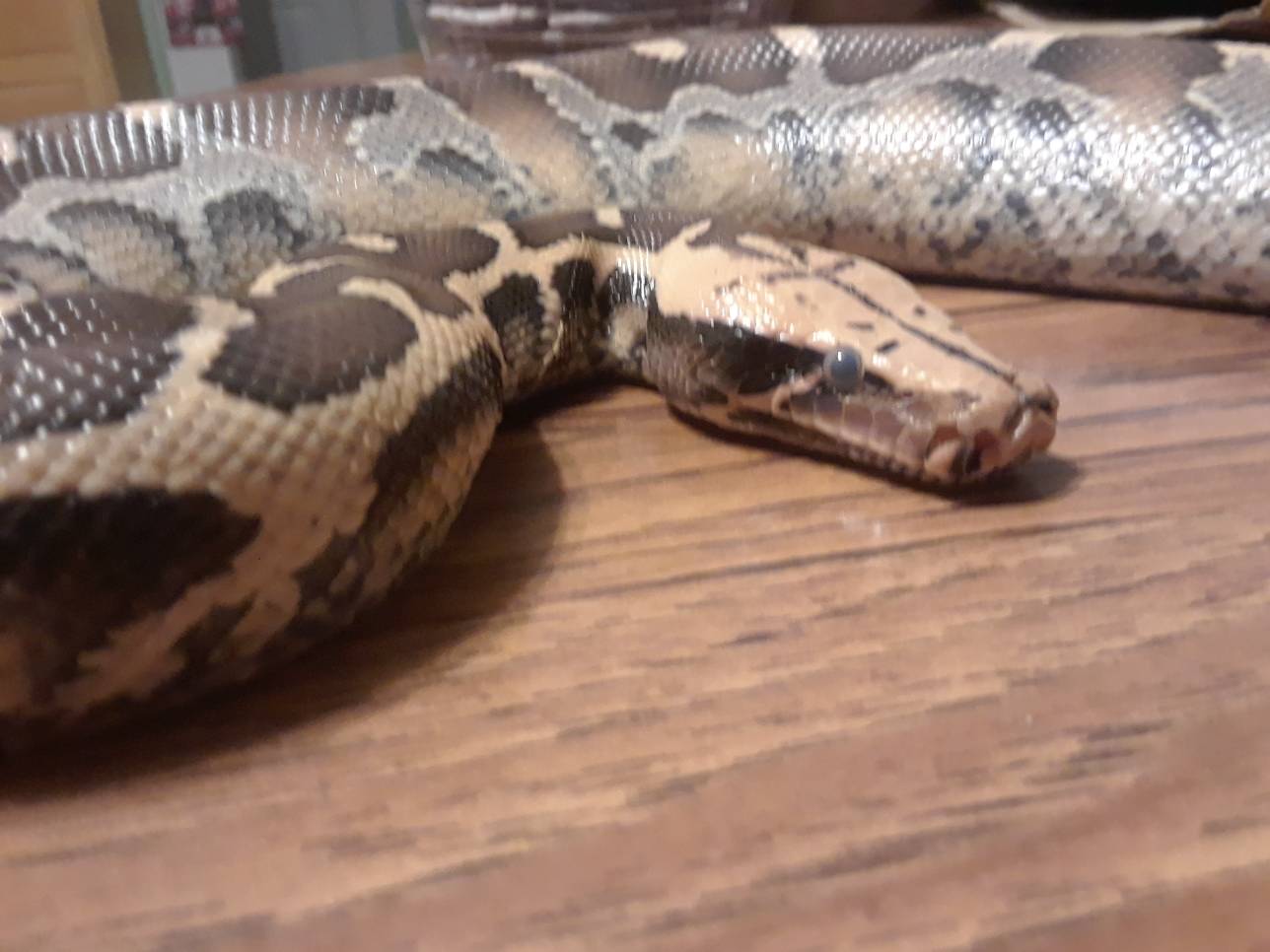 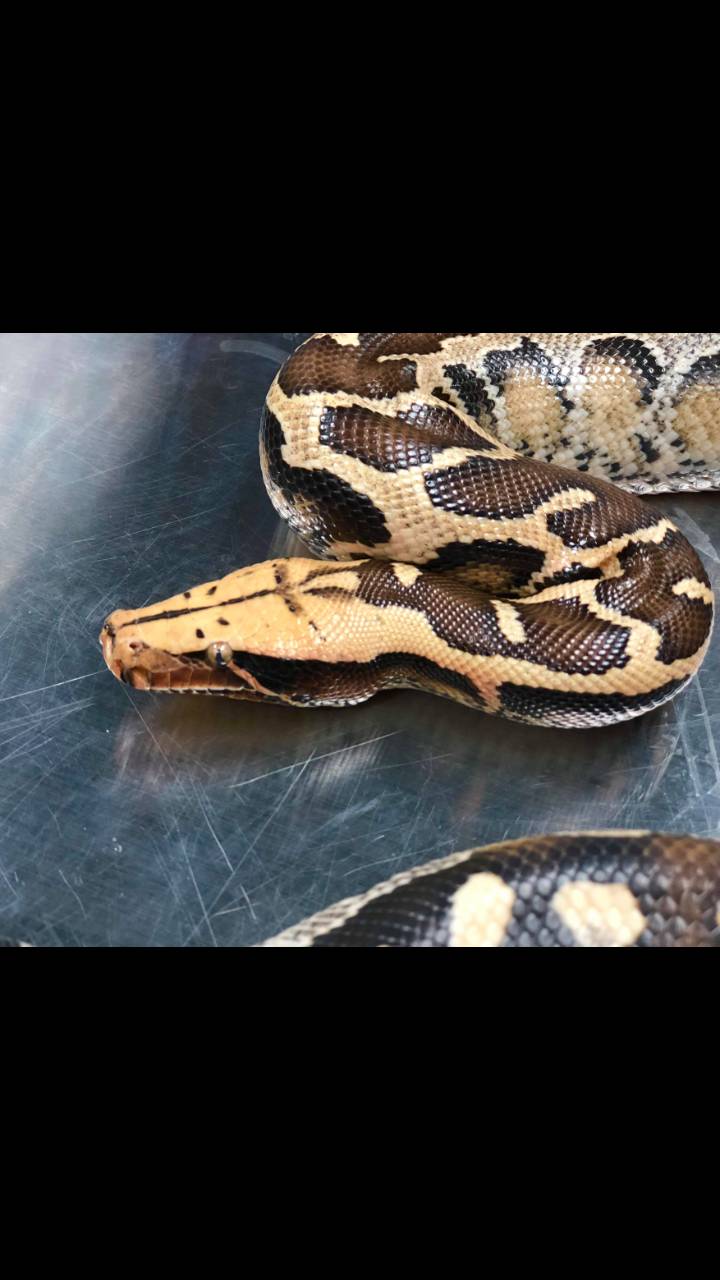
As you can see, his eyes and skin are both hazy and have a dull, blueish tint in one pic, but in the other his eyes are clear and his skin really pops.
Sent from my SM-J327T1 using Tapatalk
Last edited by Craiga 01453; 01-03-2018 at 02:29 PM.
-
The Following 3 Users Say Thank You to Craiga 01453 For This Useful Post:
dadofsix (01-03-2018),larryd23 (01-03-2018),richardhind1972 (01-04-2018)
-
Registered User
Re: What does "in blue" mean?
All of these reactions are spot on,
On the contrary as well, all my snakes feed during this phase if it so happens to be feeding day at that time. Maybe because they have never eaten live prey and don't know any difference
-
-
Registered User
Re: What does "in blue" mean?
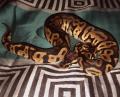
My guy also eats while in shed. He gets f/t, so he doesn't have to worry about it attacking him. Each snake is different though. There's a really helpful guide to the shedding process - maybe someone can link to that for you? The key is to disturb them as little as possible if you notice they are shedding, as they will typically become more nervous and will sometimes stay in their hide the whole time.
Sent from my SM-J327P using Tapatalk
-
Posting Permissions
- You may not post new threads
- You may not post replies
- You may not post attachments
- You may not edit your posts
-
Forum Rules
|





 Reply With Quote