» Site Navigation

0 members and 2,871 guests
No Members online
Most users ever online was 54,199, 06-29-2026 at 02:43 AM.
» Today's Birthdays
» Stats
Members: 76,152
Threads: 249,288
Posts: 2,573,168
Top Poster: JLC (31,651)
|
-
Re: Feeding Question
 Originally Posted by rlondon1231

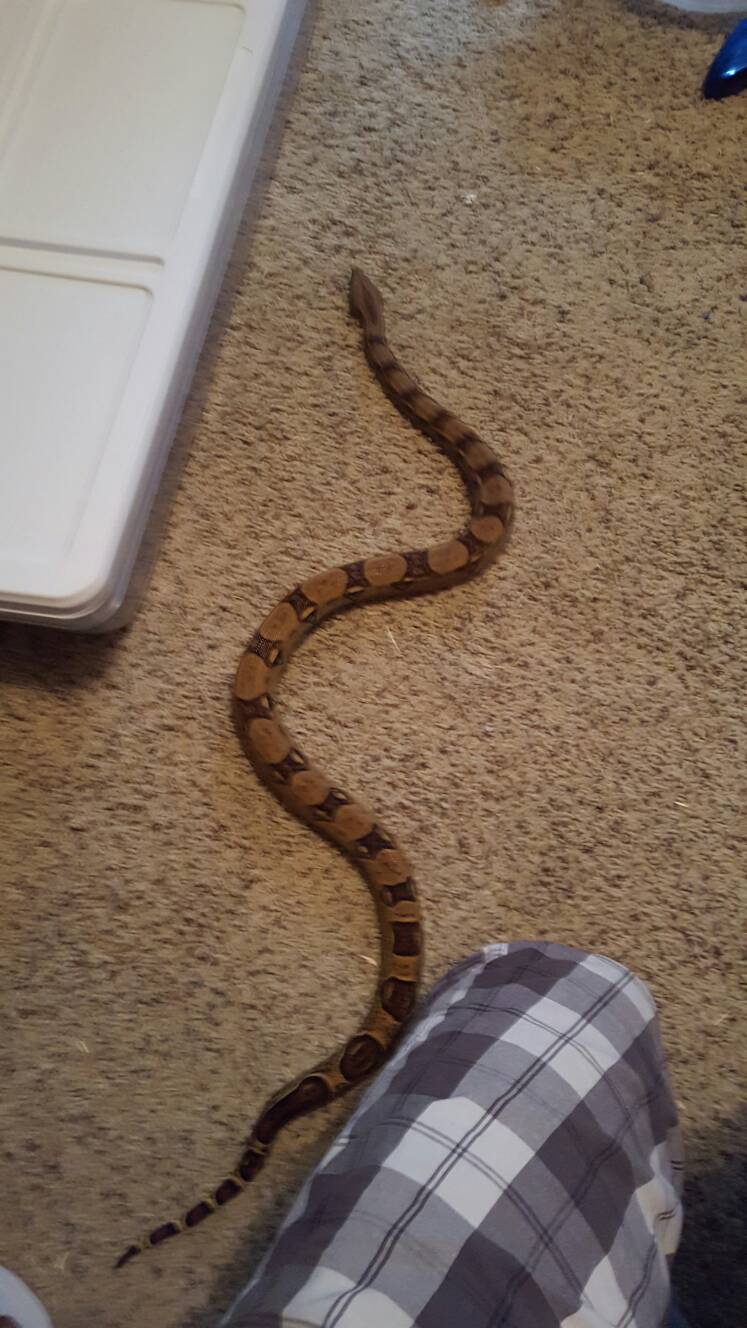 right now shes esting 1 weaned rat every 7-14 days. Should i give her maybe 2 every 14 days
Sent from my SM-G920P using Tapatalk
Skip the 2 items and feed one larger.
As far as prey type there is barley an animal alive that doesn't have fat in its physical make up.
If you are feeding captive bred prey, which most of us are, you are feeding your snake an animal that has more fat than the same type of animal in the wild. THE WILD has various obstacles for all animals. Usually wild animals need to find food and shelter (things that are a given for captive animals) and satisfy mating requirements to continue the species.
Your typical wild mouse, rat, quail or whatever is doing a lot more work to survive than any captive animal. Less food, much more running around, possibly finding food and then losing it to a more dominant animal.
So what I'm saying here is that when Gus Rentfro stated "It is almost impossible to underfeed a healthy boa." I think he was getting at this. Captivity, combined with high quality captive food sources will accelerate a boa's growth rate and if left unchecked, eventually lead to an early demise.
Reiz is correct about the individual snake having different requirements.
But he has experience with his animals. If you are new to boas, you probably can't read your animal as well as a person who has had a boa for 1, 2, 3 or more years.
If your boa is striking the glass every time you walk passed, you very well may need larger prey. However, larger prey must be accompanied by longer intervals between meals.
I actually like when my boa takes a shot at me. When that time comes, I know he is actively hunting every night and is ready eat. They almost always eat, but they are not actually "ready".
When people talk about boas being "boring and inactive" I'd wager many of those boas are "fat and happy". No need to forage, no need to move an inch. They are accustomed to receiving a meal on a regular schedule. It's something that I don't think is necessarily a good thing.
The boa has evolved over millions of years and they are so hard wired, that even in captivity they respond to the smallest of seasonal changes. Their evolution never included year round feeding, not weekly, not monthly, but more feast or famine and the strongest survive.
We need to fall somewhere in the middle. Captivity does have its benefits, but we as keepers need to choose wisely. I like seeing a post here where somebody has a 12 year old snake. That's starting to move toward a longer life. Gus Rentfro had a 30 year old boa that produced a litter. That's something special.
When I mentioned variables in my first post, they exist. Breeding female,,,,, breeding male, young neonates. All have different requirements.
If you know somebody that has a boa that is 20 or more years old and still extremely healthy, you may want to talk to them because they are doing something right.
As far as prey goes, I like to feed my almost 4 year old boa large rats, large quail, or 1 - 1.5 pound rabbits.
Depending on what I give and when, I will either stretch feed intervals, or downsize the prey animal.
When I see all waste is gone, I wait to see activity, and though I usually feed when he has become active, I know that he needs to be really hungry to take a rabbit. The old glass strike is the perfect time to try that out.
Bottom line, learn to read your snake, and also understand the species and the biology of the species.
-
The Following 6 Users Say Thank You to Gio For This Useful Post:
bcr229 (06-14-2016),BFE Pets (06-13-2016),EL-Ziggy (06-14-2016),Fraido (06-29-2016),GoingPostal (06-27-2016),Reinz (06-14-2016)
Posting Permissions
- You may not post new threads
- You may not post replies
- You may not post attachments
- You may not edit your posts
-
Forum Rules
|






 Reply With Quote