







Chimeras have been all over the place in the rat world lately. Non-genetic, true Chimeras. It's odd. lolOriginally Posted by Rhasputin

With rats, as you said, if there are multiple dilutes, it can be hard to tell if they are Merle or not. What makes me think Chimera is the shade of the base coat. Very uncommon for this dark of a Merle. It appears to be some sort of diluted Mink, likely a Havana, meaning the splotches should NOT be this dark. They should be a diluted Mink as well. As the splotches/spots in Merle rats are the shade of Mink, not Black. Let me put it this way, I've never seen a Merle like this prove to be genetic, but I could be wrong.
If he has Merle in his lines, I agree though. It's likely just a very, very interesting/nice Merle. If there haven't been any Merles, I'd say Chimera. I wish Merles in the rat world looked like this. So very lovely.
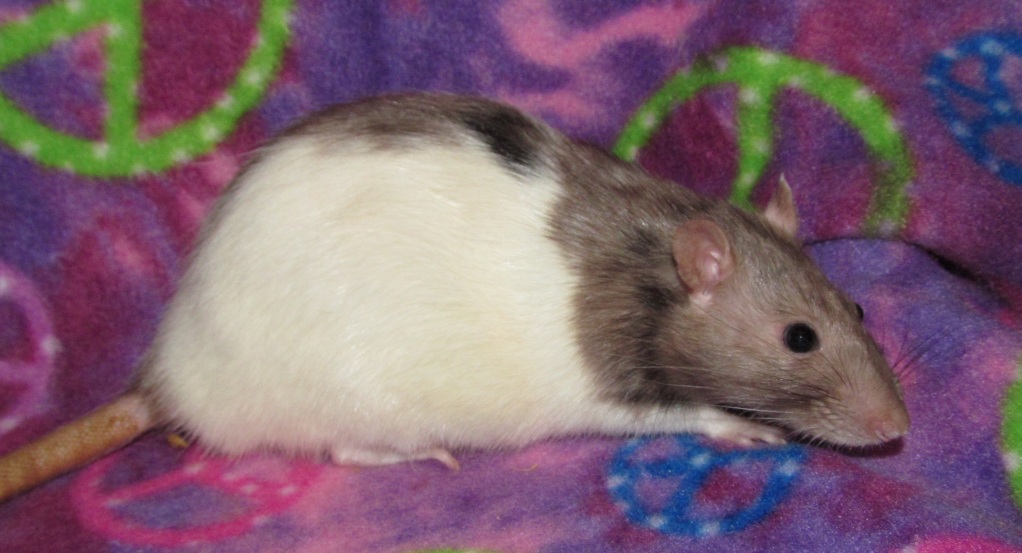
Here is a photo of what is believed to be a Mink based Chimera. While she appears Merle, it was not genetic. Several generations were bred and they were not reproduced. She was genetically UK Mink, which is known for it's extremely poor Merling.





 Reply With Quote