» Site Navigation

1 members and 669 guests
Most users ever online was 47,180, 07-16-2025 at 05:30 PM.
» Today's Birthdays
» Stats
Members: 76,070
Threads: 249,219
Posts: 2,572,799
Top Poster: JLC (31,651)
Welcome to our newest member, mh789
|
-
I agree with Robin on pastels too, a good one is difficult to find and can make some amazing combos when you do have a good line.
It's all about the quality in every morph you breed 
Jerry Robertson

-
The Following User Says Thank You to snakesRkewl For This Useful Post:
PitOnTheProwl (01-13-2013)
-
As a rule, ball pythons don't maintain the same coloration, particularly the same depth of coloration, in adulthood when compared to hatchlings. Some individuals brighten but often lose depth of color. Some gain melanin (pretty darn common). Some change color completely.
Very few colors and tones stay the same, but some more than others. The albino's yellows and white are pretty darn close to identical at hatching and in adulthood. Bananas/Coral Glows have intense coloration as adults, but gain a little bit of peppered black scales. Various super Blue-eyed-leucistic-complex animals seem to maintain the same coloration into adulthood (white snakes stay beautifully white, purple/grey stays purple/grey, super special's mild yellow hues stick around). Black eyed leucisticis similarly have little change as they age, though I have seen the yellow blotches they are prone to having both fade in some and darken in others, but not terribly significantly. The whites on piebalds seems to stay very clean, but the patterned sections are prone to change.
Various forms of hypomelanism can go against the typical "darkening with age". Plenty of hypos, fires (which really seems to be a form of hypomelanism), and similar morphs "brighten". This typically manifests as a washing-out of color, where bright yellows turn more eggshell white, mild browns turn into light browns, blacks turn into dark greys. There still is a color change, but adults are surely not "more brown" than hatchlings.
Enchis are weird because the best individuals seem more "golden" as adults.
As a rule though, you can expect less intense yellows, and a bit more melanin with most ball pythons.
If you want to understand color in animals a bit more, do some reading on wikipedia about melanin, chromatophores, and biological pigments.
-
-
-
-
Recently I have seen a lot (and I mean a lot) of poor looking pastels. Mainly because that is almost always the next step up from a normal and very inexpensive. People who start out don't really know what to look for and end up with a bunch of crappy $50 pastels. Then the pastels are bred with other lower quality morphs... and you can see where I am going. Those not-so-great pastel genes are getting passed around, creating not-so-great bees. I rarely see a pastel or bee that catches my eye.
That being said, it doesn't mean all pastels and all pastel combos are bad. You just have to find the right pastel. I'm currently focusing on Citrus pastels. I have 3 animals with the citrus gene and they are all spectacular examples of the morph (if I do say so myself). They are still young so I'm not too sure how they will really turn out, but I am confident they will hold their extreme yellow color.
This also goes for VPI vs. SK axanthic in my opinion. Most adult axanthics I have seen look like normal ball pythons. They brown out so badly they are very hard to distinguish. From what I have witnessed, the VPI axanthics seem to hold their silvery color much better.
edit: 7,000th post! lol
Last edited by Kaorte; 01-13-2013 at 01:44 PM.
~Steffe
-
The Following User Says Thank You to Kaorte For This Useful Post:
-
BPnet Veteran

 Originally Posted by rabernet

I'll have to disagree with you once again. On both your pied comment and the pastel comments. High quality pastels are highly UNDER rated.
Sent from my Samsung Note II using Tapatalk 2
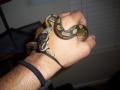
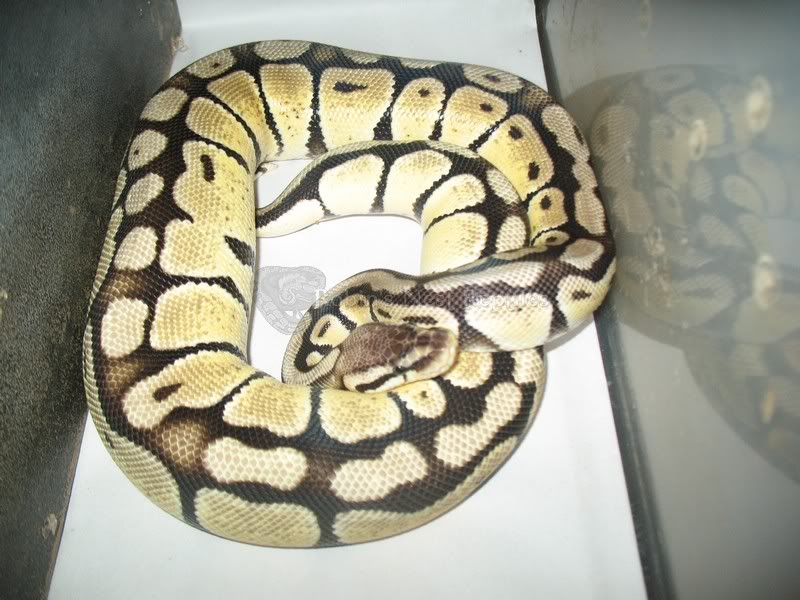
Wow! Do you have a picture of that as a hatchling?
0.1 Normal Het Albino
0.1 Spider Het Lavender Albino
0.3 Firefly

-
-
Re: Do morphs keep color
Kinda cool it happen on this thread.
Last edited by Gerardo; 01-13-2013 at 03:09 PM.
-
-
I get what Ryan is saying about pieds. I don't agree with him: I got into this business BECAUSE of pieds. My whole world revolves around them, and I know exactly what I want to combine with what to make the prettiest, brightest, craziest pieds. I personally think spiders are useless, because you can't combine them with pieds and get anything interesting...
But if I had started out as a spider fan instead, than yeah. For a spider person, pieds are useless, because all they make are white snakes. And you had to do a bunch of breedings to get those, because pieds are recessive.
But I think he's just plain wrong about pastels. Yeah, pastels needs a clean-up gene. But all those spectacularly bright 3+ gene snakes you see at the shows these days, most of them have pastel in them. If you want yellow, and you don't want an albino, then you have to stick some pastel in there at some point. And it's a co-dominant trait, and practically free. That's REALLY useful.
Last edited by loonunit; 01-13-2013 at 07:49 PM.
-Jackie Monk
-
-
I guess I'm just an odd ball, but I actually like the look of a big ole browned out pastel.
-
-
Re: Do morphs keep color
Originally Posted by mainbutter
Various forms of hypomelanism can go against the typical "darkening with age". Plenty of hypos, fires (which really seems to be a form of hypomelanism), and similar morphs "brighten". This typically manifests as a washing-out of color, where bright yellows turn more eggshell white, mild browns turn into light browns, blacks turn into dark greys. There still is a color change, but adults are surely not "more brown" than hatchlings.
Enchis are weird because the best individuals seem more "golden" as adults.
As a rule though, you can expect less intense yellows, and a bit more melanin with most ball pythons.
If you want to understand color in animals a bit more, do some reading on wikipedia about melanin, chromatophores, and biological pigments.
I definitely agree that hypos (and their combos) brighten and get better with age. Here's my hypo enchi at around 60 grams (breeder photo, credit to Steve Winkler) and at over 500 grams.


-
The Following 2 Users Say Thank You to HypoLyf For This Useful Post:
h00blah (01-13-2013),snakesRkewl (01-13-2013)
-
Re: Do morphs keep color
Originally Posted by Beto510
Wow! Do you have a picture of that as a hatchling?
Why yes I do! 

-
The Following 3 Users Say Thank You to rabernet For This Useful Post:
Beto510 (01-13-2013),HypoLyf (01-13-2013),snakesRkewl (01-13-2013)
Posting Permissions
- You may not post new threads
- You may not post replies
- You may not post attachments
- You may not edit your posts
-
Forum Rules
|








 Reply With Quote