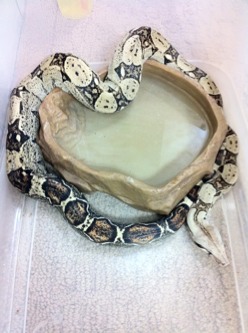
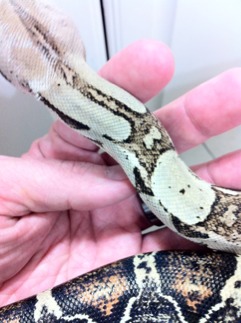
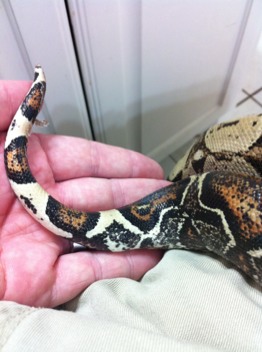
He looks like a normal BCI to me. I first thought of an anery from the first pic (the greyish coloring as most normal BCIs brown out when they age) but he could just be a grey regular Colombian.
He looks like a normal BCI to me. I first thought of an anery from the first pic (the greyish coloring as most normal BCIs brown out when they age) but he could just be a grey regular Colombian.
I thought maybe anery from the first pic too, but in these later ones he looks normal to me. Normal BCI have that salmon coloration on their tails too. Very pretty snake!
Thank you very much. Lol. I brought home a baby ball 2 weeks ago. My 15 yo daughter decided it should be hers in her room. Now I adopt this beauty last night and my wife decides it's hers. Lol. Thanks for the identity help. I'm not familiar with the BCI. Everyone I know has a BCC.
^ Make sure you are quarentining the new additions separate from each other.
BCIs include Colombians and Central American boas among others. BCCs are "pure" red tails and include Puruvians and Surinames (also among others). BCCs usually grow larger than BCIs and BCIs are more common (usually sold in pet stores). BCCs will cost more than BCIs as well (unless you're getting into the expensive morphs of BCIs).
^ Make sure you are quarentining the new additions separate from each other.
One lives upstairs, one down. They don't cross treads. Lol
BCIs include Colombians and Central American boas among others. BCCs are "pure" red tails and include Puruvians and Surinames (also among others). BCCs usually grow larger than BCIs and BCIs are more common (usually sold in pet stores). BCCs will cost more than BCIs as well (unless you're getting into the expensive morphs of BCIs).
Thanks for the info. I had that part, it was trying to figure out the locality(?) it is that I couldn't quite tell. Thanks again, you guys are great.








 Reply With Quote



 Originally Posted by Daybreaker