» Site Navigation

0 members and 3,699 guests
No Members online
Most users ever online was 54,199, 06-29-2026 at 02:43 AM.
» Today's Birthdays
» Stats
Members: 76,111
Threads: 249,262
Posts: 2,573,023
Top Poster: JLC (31,651)
|
-
Registered User

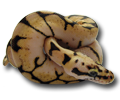
Cinny VS Black Past.
Ok well I have been looking for a Black past. for a little bit now, but in my research I found that Cinny and BK past are one in the same, In many peoples mind. Well I am looking for someone who has bred a cinny to a Black past. and if they combined to make a "super", if I cant find this I would like to see a few pics of both super BKs and some super cinnys. The end goal of this project will be a panda pied way down the road. The only reason I ask is I found a couple cinnys for a good price and I can really pass it up if it will work into my long term goals, I do get that super cinnys would work for the panda pied but would a cinnyx Black past. get me there. If they are the same then Ill go with a cinny this year and BK past next year as they are almost twice as much as a cinny, from what I am seeing. can get a 300 f Cinny right now or 500 for the cheapest M Black I saw this year.
-
-
Re: Cinny VS Black Past.
Black pastels and cinnies look different and so do their combos however they will produce a super when bred to one another.
-
The Following User Says Thank You to Stewart_Reptiles For This Useful Post:
-
Or you could get some cinny or blacks pos. het Pied and a Pied. That would at least give you a further head start in your project. Both will work in producing the Panda Pied...which BTW, I'm surprised has not been reproduced since the first one 2 years ago.
-
The Following User Says Thank You to Brandon Osborne For This Useful Post:
-
Re: Cinny VS Black Past.
 Originally Posted by Deborah

Black pastels and cinnies look different and so do their combos however they will produce a super when bred to one another.
I thought the 8-ball was considered a combo snake and not a super?
Jerry Robertson

-
The Following User Says Thank You to snakesRkewl For This Useful Post:
-
Registered User
so cinny X BK Past. = Black snake, white belly, producing no normals?? if thats so then its easy one of each plz  and Ya they do look a little differant I guess, but but like butter, lesser. individual animals can look like the other quite readily. and Ya they do look a little differant I guess, but but like butter, lesser. individual animals can look like the other quite readily.
-
-
Re: Cinny VS Black Past.
If I take an 8-ball and breed it to a normal I can tell which are black pastels and which are cinny's, I can't say the same for a butter/lesser BEL bred to a normal.
Jerry Robertson
-
The Following 2 Users Say Thank You to snakesRkewl For This Useful Post:
h00blah (09-21-2010),Hilltop (09-22-2010)
-
Re: Cinny VS Black Past.
Originally Posted by Hilltop
so cinny X BK Past. = Black snake, white belly, producing no normals?? if thats so then its easy one of each plz and Ya they do look a little differant I guess, but but like butter, lesser. individual animals can look like the other quite readily.
No. You will produce normals, cinnies, black pastels, and the super form of both combined....a black ball python. I've seen cinnies that look like bk pastels and bk pastels that look like cinnies. IMHO, the cinnies produce better looking combos, but everyone has their opinion on what looks better. Good luck.
-
The Following User Says Thank You to Brandon Osborne For This Useful Post:
-
Registered User
so then its not a super in any true sense just a combo that looks like a super cinny or BK Past. ok thats the answer I was looking for. One or the other , and BK's seem to have the nicer supers soo... no cinny for this guy  its a good deal but wont really work long term. its a good deal but wont really work long term.
-
-
Registered User
Re: Cinny VS Black Past.
Originally Posted by Brandon Osborne
No. You will produce normals, cinnies, black pastels, and the super form of both combined....a black ball python. I've seen cinnies that look like bk pastels and bk pastels that look like cinnies. IMHO, the cinnies produce better looking combos, but everyone has their opinion on what looks better. Good luck.
I thnk you missunderstood my meaning. I meant its possible to produce a super from the pairing and that super would have not produce normal offspring,
-
-
BPnet Veteran
It could also be that the two mutations are both separate mutant alleles of the same gene (similar to the BEL and YB complexes). The fact that they look different enough, yet have nearly identical homozygotes makes this theory plausible. Additionally the (for purposes of this particular explanation) heterozygote containing one black pastel and one cinnamon allele being nearly identical to each homozygote would further support this theory.
Of course, it is equally plausible both could just be at opposite extremes of the phenotypical spectrum resultant of the mutant allele, as has been suggested before. The fact that there have been cinnamons hatch that resemble black pastels and vice-versa would appear to support that theory.
The only way to prove either though would be to examine and compare the DNA of specimens from each mutation, which I don't see happening anytime soon. It is safe to say that in the ball python hobby both mutations are considered separate, but related. Again, considering this, the only other comparisons I can come up with in P. regius are the multiple allele cases I mentioned earlier.
-
The Following 3 Users Say Thank You to Russ Lawson For This Useful Post:
dr del (09-22-2010),Hilltop (09-22-2010),snakesRkewl (09-22-2010)
Posting Permissions
- You may not post new threads
- You may not post replies
- You may not post attachments
- You may not edit your posts
-
Forum Rules
|






 Reply With Quote