» Site Navigation

1 members and 1,731 guests
Most users ever online was 54,199, 06-29-2026 at 02:43 AM.
» Today's Birthdays
» Stats
Members: 76,102
Threads: 249,248
Posts: 2,572,955
Top Poster: JLC (31,651)
|
-
Registered User

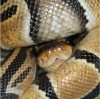
Re: Raised scales? Beginning of scale rot? Mites?
The way the store made it sound, the bumps showed up gradually over the past few weeks, which is why I'm a bit hesitant to think they're bite wounds.
They didn't know what was wrong with him, and didn't want to pay to take him to a vet. They were hoping someone would feel sorry for him and take him home/fix him up. I need to go back later this week anyway, so I'm hoping to talk to the girl who actually cares/feeds the snake in order to get more details. She's the one who supervises when they feed, so I'm guessing she'd notice if he'd gotten bit. (of course, I'm sure the vet can tell me either way what they are, I'll just breathe a lot easier when I know what it is.  ) )
-
-
Re: Raised scales? Beginning of scale rot? Mites?
 Originally Posted by Nevadamoon

The way the store made it sound, the bumps showed up gradually over the past few weeks, which is why I'm a bit hesitant to think they're bite wounds.
They didn't know what was wrong with him, and didn't want to pay to take him to a vet. They were hoping someone would feel sorry for him and take him home/fix him up. I need to go back later this week anyway, so I'm hoping to talk to the girl who actually cares/feeds the snake in order to get more details. She's the one who supervises when they feed, so I'm guessing she'd notice if he'd gotten bit. (of course, I'm sure the vet can tell me either way what they are, I'll just breathe a lot easier when I know what it is. )
go to the vet. 
-
-
Registered User
Re: Raised scales? Beginning of scale rot? Mites?
Yup, got an appointment Tuesday unless someone cancels on Monday, and then they're giving me a call. Herp vet doesn't like coming into work on the weekends, and my other exotics vet is mostly bird-specialized. (So said he could take a look, but might not have much help to offer me.)
-
-
Registered User
-
-
Re: Raised scales? Beginning of scale rot? Mites?
To me, some of the scales look dry. Sometimes when snakes shed and the humidity wasn't high enough the molting skin will take some parts of the skin with it, making some of the scales feel more rough or sticky-ish. This has happened to me a few times, so that's why I think it could've been that.
From what I have seen, scale rot normally starts out on the underside. But, the scales that look funny could also be bites from a rodent as dr del said.
-
-
Re: Raised scales? Beginning of scale rot? Mites?
It does look like old scars....are you sure they were not there when you first got him. Maybe they are getting lighter in color due to an upcoming shed???
Also ticks will raise scales they look like a little black bump under the scales. Get a magnifying glass and try to take a look. You will be able to see them kind of behind the scale...so to speak.
Mind you this is all research I have done and pics I have seen. Never seen it in person. Just read ALOT!!
Is he acting normal?
-
-
Re: Raised scales? Beginning of scale rot? Mites?
acutally I was posting while you were putting up new pics. Is it getting worse??? Those pics make it look worse than it did. I take it back...that doesn't look like scars. And to be honest.....I have no clue. I will do some research and if I find anything I will let you know. sorry...
Also I know you are practicing good quarantine rules....but try to everything with this snake last. You never know what you might be able to transfer on just your clothes.
-
-
Registered User
Re: Raised scales? Beginning of scale rot? Mites?
Originally Posted by CoolioTiffany
To me, some of the scales look dry. Sometimes when snakes shed and the humidity wasn't high enough the molting skin will take some parts of the skin with it, making some of the scales feel more rough or sticky-ish. This has happened to me a few times, so that's why I think it could've been that.
From what I have seen, scale rot normally starts out on the underside. But, the scales that look funny could also be bites from a rodent as dr del said.
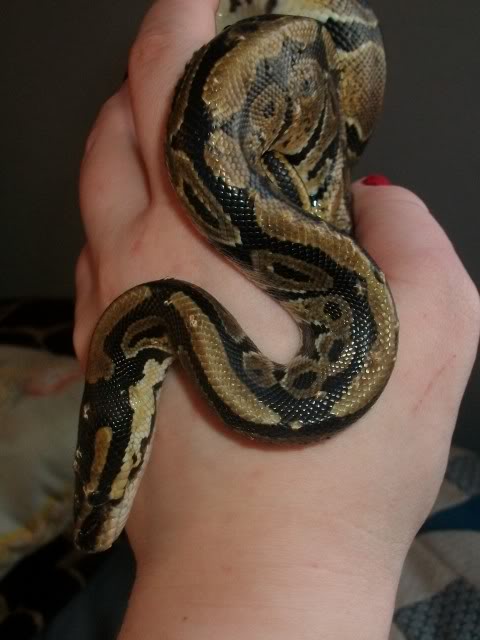
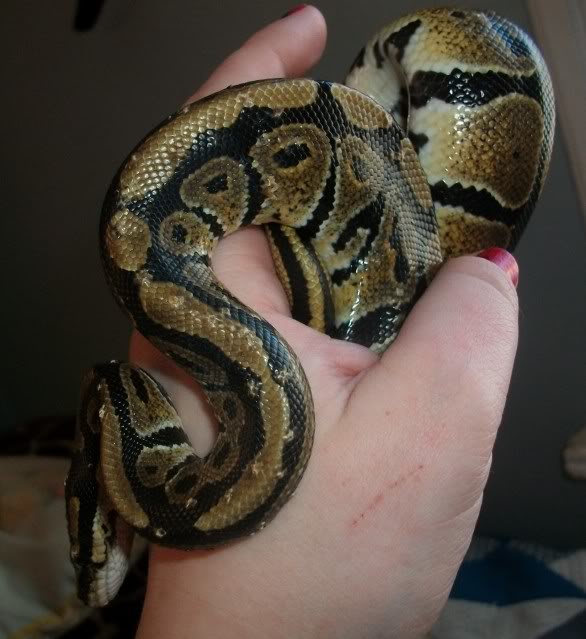
They definitely feel rough/dry and do not have fluid or anything under them. You can't see skin or redness either. I know at the store their herps are kept pretty dry, just above desert humidity. Not sure when he shed last.
BPelizabeth- I've only had him for just a bit over 24 hours. When the store got him (a few months ago) he was smooth and normal looking. Then he started getting bumpy. I don't know if he shed in that time, I was going back to the pet store in a few days anyway and will probably ask the girl who's more in charge of caring for the herps. (Vet visit will probably happen before I get back in there, though.) No mites or ticks, though the store did recently have a bug problem. He was sprayed with something at the store like the other reptiles a few weeks ago. Not sure what it was, or if it would have killed the bugs and left his scales as they are now. (It does sound like the bugs and the bumps starting showed up at around the same time.)
He acts completely normal. Haven't fed him yet, but he doesn't breath hard/heavy, doesn't sneeze, and acts just like any other snake. Very comfy with being handled and will explore around a little while you hold him.
-
-
Registered User
Re: Raised scales? Beginning of scale rot? Mites?
Originally Posted by BPelizabeth
acutally I was posting while you were putting up new pics. Is it getting worse??? Those pics make it look worse than it did. I take it back...that doesn't look like scars. And to be honest.....I have no clue. I will do some research and if I find anything I will let you know. sorry...
Also I know you are practicing good quarantine rules....but try to everything with this snake last. You never know what you might be able to transfer on just your clothes.
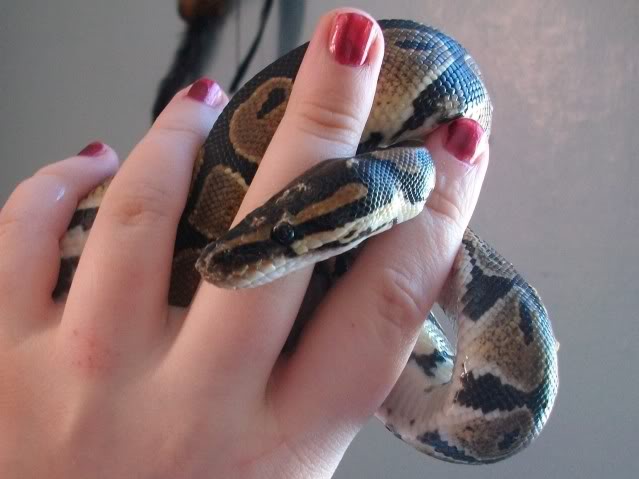
Looks just like it did yesterday, but he's more relaxed today so I was able to get pictures that weren't just him balled up. They kind of pull flat when he's balled up, and most are concentrated on his front half so I didn't get them in the initial pictures.
I don't plan on really handling him much til he's settled in, but yup. Handling him last and changing clothes/showering before touching other snakes.
-
-
Re: Raised scales? Beginning of scale rot? Mites?
Ok....I pulled out all of my handy dandy books and went through them all. I did find an interesting thing. It is called Dermal Fungal Infection. Typically it is caused by unsanitary conditions or overly moist conditions. The scales can loose their shine and some areas can become raised. At times even start to look like a burn eventually.
I also found this on a website...
Blisters/Bullae: The difference between the two is simply a matter of size. In both cases, they result from being kept in an environment that is too moist (terrestrial reptiles), or dirty water (aquatic and semi-aquatic turtles). While they may be free of bacteria when first formed, when they break, they permit bacteria to enter through the resulting defect, which can lead to localized infection or septicemia ("blood poisoning", or system-wide infection).
Crusts: dried intracellular fluid, blood and other matter that forms on top of a laceration or abrasion. Before these areas dry and become crusty, they will be seen and felt as a thin, wet, clear or yellowish fluid.
Cysts: these large, fluid filled structures are most commonly associated with subcutaneous parasites, such as tapeworm. Other causes include the traumatic separation of the epidermis from the dermis below, burns, or other severe trauma.
Nodules: granulomas which are usually associated with many kinds of infection, from bacteria, fungi or parasites. In order to appropriately treat the underlying condition, proper diagnosis must be made.
Parasites: besides ticks and mites, there are various endoparasites which live part of their life cycle inside the host, and then migrate outwards, through organs and tissues, to form small nodes or bumps under the skin, which may or may not create exudates or crusts. The parasite does cause an irritation, which, when in its usual host, will cause the host to rub up against something to 'scratch the itch'. This serves to break open the already inflamed skin, freeing the parasite to move on to its next stage. With the lack of proper quarantine and generally filthy conditions endemic in the pet trade, animals - and humans - are coming into contact with, and playing host to, parasites which don't normally inhabit them. This can result in a parasitic nodule sitting under the skin, causing an inflammatory reaction. If not removed properly, it can cause stress, leading to infection...or infect the human who carelessly picks at it.
Patches of skin color/texture change: may be associated with fungi or bacterial infections, necessitating proper diagnosis to determine the required treatment
Sorry I don't have any more for you....I am glad that you have a vet appt. though. Keep us updated.
Last edited by BPelizabeth; 02-14-2010 at 10:59 PM.
-
Posting Permissions
- You may not post new threads
- You may not post replies
- You may not post attachments
- You may not edit your posts
-
Forum Rules
|






 Reply With Quote