» Site Navigation

0 members and 1,640 guests
No Members online
Most users ever online was 54,199, 06-29-2026 at 02:43 AM.
» Today's Birthdays
» Stats
Members: 76,102
Threads: 249,247
Posts: 2,572,954
Top Poster: JLC (31,651)
|
-
BPnet Veteran

paradox
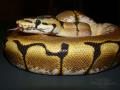
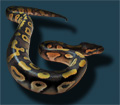
what exactly is paradox? i know how it looks on the snake, but not clear on whats going on genetically and pigment wise.
-
-
Re: paradox
I think its when twins in the egg combine at an very early stage, one being the morph and the other being a normal or het. This is also why it is not reproducible.
- Matt
Come here little guy. You're awfully cute and fluffy but unfortunately for you, you're made of meat
-
-
Re: paradox
Better yet
 Originally Posted by WingedWolfPsion

The Paradox phenomenon doesn't occur only with albinos--it's also seen in co-dominants (paradox blue-eyed leucistics, paradox mojave, etc).
As you can see, the snake looks like an albino and a het albino were merged together.
And that is probably EXACTLY what has happened. In the egg, when fraternal twin embryos were just forming, they stuck together, and began growing into one single snake, instead of two.
The resulting single animal is called a chimera. It contains two genetic codes--one for an albino, and one for a het albino, arranged in a rather random mosaic pattern. It's a coin toss as to whether the reproductive organs will be from the albino, or from the het--or even normal, if the animal resulted from a het to het breeding!
This is why the paradox trait is not, and never can be, genetically reproduceable. It's actually just two snakes in one!
Chimerism can even occur in humans. Some poor woman was shocked and baffled when DNA tests showed that she was NOT the mother of her own children--her 'sister' was!
- Matt
Come here little guy. You're awfully cute and fluffy but unfortunately for you, you're made of meat
-
-
BPnet Veteran
Re: paradox
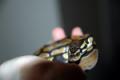
I believe its most comparable to chimera in humans....which offers a logical explanation.
-
-
BPnet Veteran
Re: paradox
SO FAR NO ONE KNOW
In my little experience, I would believe it's a 4-5 gene that make these. Let's say it's a multiple recessive gene combo. (some genes involved could be dominant too, don't know).
I think it would explain better why there is more "PARADOX" in the Ivory/YB than there is with Pied, Albino, Spider etc.....
I would believe the probability of this makes more sense than the Chimerism stuff IMO.
-
-
BPnet Veteran
Re: paradox
You wouldn't see a chimeric normal or anything else that is the result of homozygous breeding...it would just look like a regular animal.
-
-
Re: paradox
It's not genetic. Not IMO
-
-
Re: paradox
Paradox's happen in morphs that lack the dark pigments, example; albino, BEL, Ivory. It seems some areas produce the dark pigments which appear as patches or sometimes parts of the actual pattern. They are not geneticly proven but seem to be random occurances.
-
-
BPnet Veteran
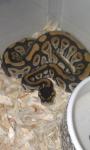
Re: paradox
Could the snake be proven as a chimera by testing its genetic makeup? I would think some scientist would be interested in checking on this interesting phenomenon.
It reminds me of the woman who had a maternity test to see if her baby was her husbands/boyfriends and when the test results came back they said her sister was the mother (she didn't have a sister... or at least she thought she didn't) Turns out she was a chimera.
-
-
Re: paradox
Originally Posted by Lupe
Could the snake be proven as a chimera by testing its genetic makeup? I would think some scientist would be interested in checking on this interesting phenomenon.
It reminds me of the woman who had a maternity test to see if her baby was her husbands/boyfriends and when the test results came back they said her sister was the mother (she didn't have a sister... or at least she thought she didn't) Turns out she was a chimera.
im sure it could be proven a chimera but its really not that intresting in the grand scheme. Im sure it happens in every animal species just something that can happen during development. only reason its so intresting is its visual. who knows you could be a chimera or i could be one and we'd never know.
-
Posting Permissions
- You may not post new threads
- You may not post replies
- You may not post attachments
- You may not edit your posts
-
Forum Rules
|





 Reply With Quote